

Plan sharpened organisation’s focus on ‘safer workplaces, better recovery results, and strong financial performance’
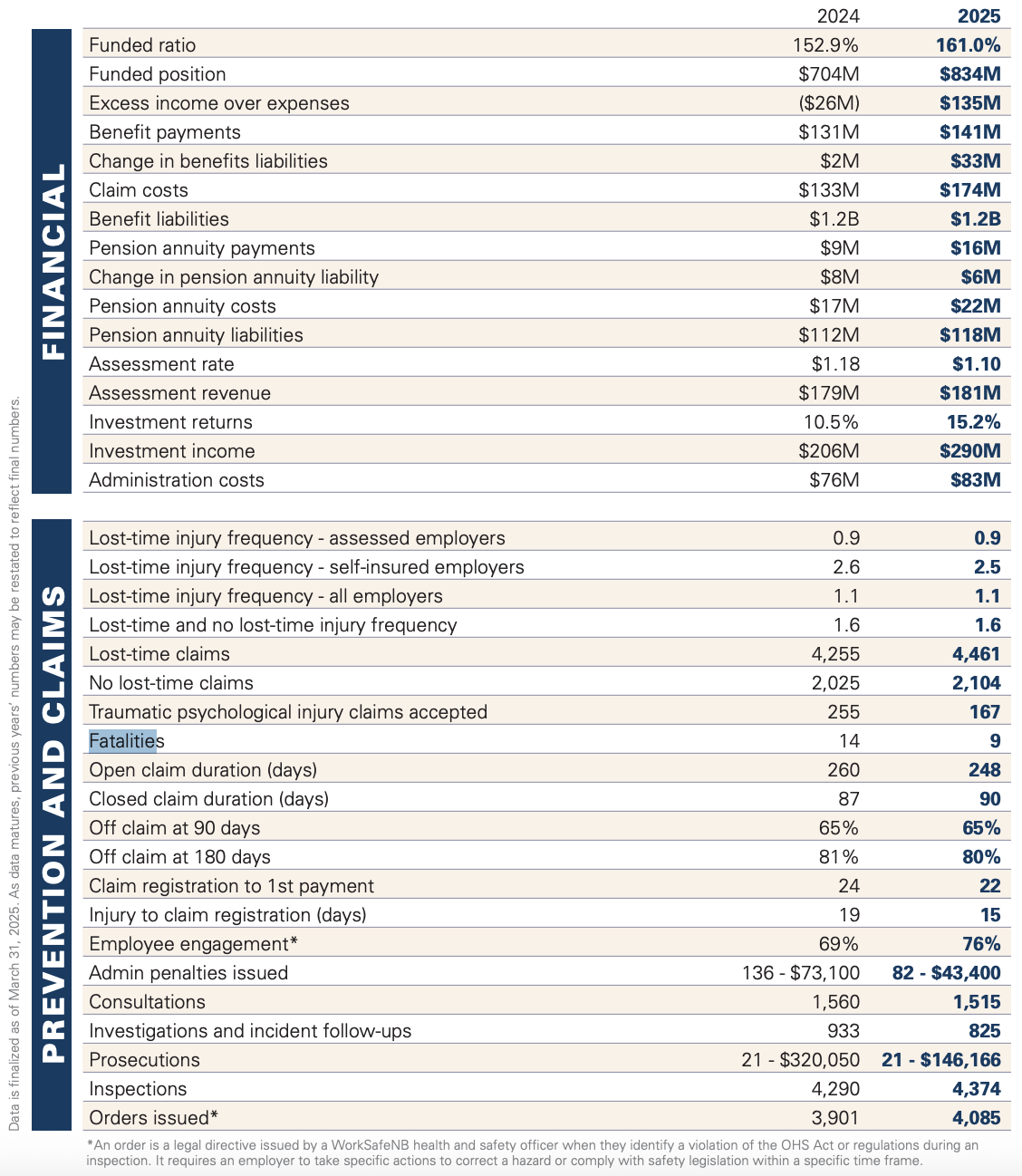
Workplace fatalities in New Brunswick declined from 15 in 2024 to 9 in 2025, while overall injury frequency held steady at 1.6 per 100 workers, according to WorkSafeNB's 2025 Annual Report released this week. Severe injury frequency, which tracks life-altering and fatal incidents, rose slightly to 36 per 100,000 workers from 34 the previous year.
"Workplace fatalities declined from 15 in 2024 to 9 in 2025 which is a meaningful step forward," WorkSafeNB stated in the report. "Every loss is deeply felt, and even a single workplace death is one too many. These tragedies are unacceptable and serve as a powerful reminder that more must be done."
Both total injury frequency and severe injury frequency were introduced as new key performance indicators in 2025, giving WorkSafeNB a clearer view of workplace safety trends. The organization's 2029 targets are 1.25 injuries per 100 workers and 30 severe injuries per 100,000 workers, meaning current results remain above both goals.
Traumatic psychological injury claims, however, showed marked improvement, falling 26 percent from 225 in 2024 to 167 in 2025, which WorkSafeNB linked to expanded mental health partnerships, including with Wounded Warriors Canada and the Paramedic Association of New Brunswick.
Financial performance
WorkSafeNB set its average assessment rate at $1.10 per $100 of payroll in 2025, the lowest in the organization's history and the second-lowest in Canada. The Crown corporation distributed more than $53 million in performance refunds to eligible employers, following a record $180.6 million refund in 2024.
WorkSafeNB's funded position reached 161 percent, exceeding its 115–125 percent target range. Investment returns of 15.2 percent drove the improved funding level.
"We held our average assessment rate at $1.10, the lowest in our history and the second lowest in the country and returned more than $53 million to employers through our performance refund," said Tim Petersen, WorkSafeNB's president and chief executive officer.
Recovery outcomes and governance
Average open claim duration fell to 248 days from 260 in 2024, a reduction of more than 80 days since 2021. Wage-loss benefits for surviving spouses were raised to 90 percent of net earnings in 2025, matching an increase already extended to injured workers.
Board chairperson Mel Norton said the organization's first full year under its 2025–2029 strategic plan sharpened its focus on "safer workplaces, better recovery results, and strong financial performance." WorkSafeNB also launched SPARC, a new integrated HR and finance system, as part of its modernization efforts.