‘All the migrant workers in the community are at some level at risk’
Two Guatemalan migrant workers are dead after being struck by a vehicle on a rural Essex County road late at night — a collision that exposes a persistent gap in agricultural OHS practice and renews calls for employers to account for the hazards workers face well beyond the farm gate.
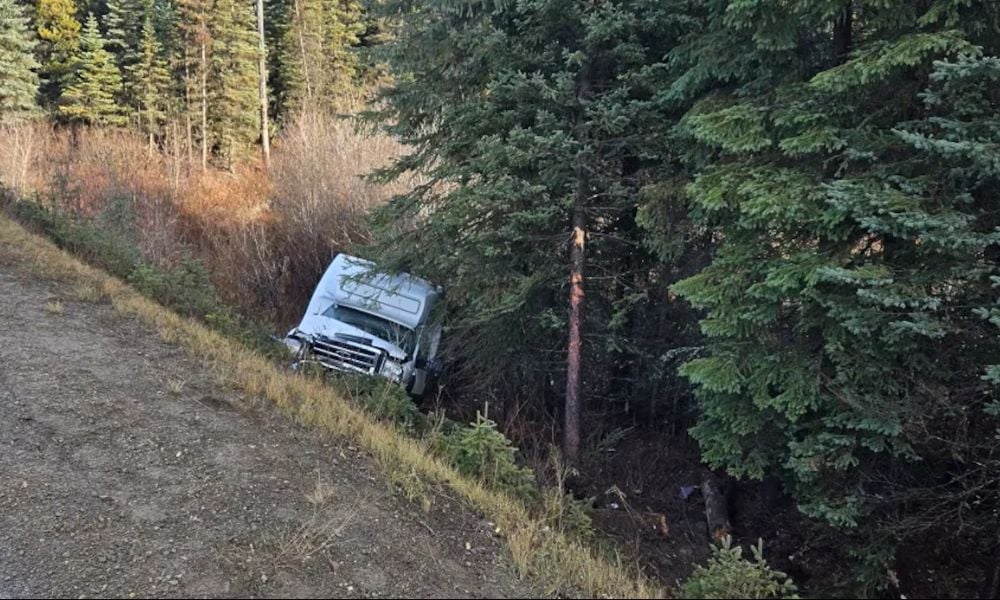
Essex County OPP, the Kingsville Fire Department, and Essex-Windsor EMS responded to County Road 34 W. between Olinda Side Road and County Road 18 at approximately 10:40 p.m. on Oct. 29, where two pedestrians had been struck by a Jeep.
Despite resuscitation efforts, the victims — a 25-year-old and a 27-year-old — were pronounced dead at the scene, according to a CTV News report. The driver remained at the scene and was not injured.
The OPP’s investigation remains ongoing with assistance from the Traffic Incident Management Enforcement (TIME) team.
Vianny Tamara, programme co-ordinator with the Migrant Worker Community Program in Leamington, confirmed to CBC News that the men were from Guatemala. “They’re here ... because they want to support their family,” she told CBC News. Rodrigo Báez, Mexico’s consul in Leamington, said the consulate helped OPP establish contact with Guatemala’s consulate in Toronto and noted that returning workers’ remains to their home countries involves co-ordinating death certificates, transportation permits, translations, and funeral arrangements.
A documented and recurring risk
The Kingsville deaths are the latest in a troubling pattern across Ontario’s agricultural regions. By late July 2026 — months before this collision — Frequency News reported that eight migrant worker deaths in Ontario had already prompted an emergency rally outside the province’s Ministry of Labour, where migrant workers, labour advocates, unions, and community allies gathered to demand action.
As Canadian Occupational Safety has reported, migrant farm worker deaths on Ontario rural roads have revived calls for road safety and program reform throughout 2026.
Syed Hussan, Executive Director of Migrant Workers Alliance for Change, told The Canadian Press that workers under the Seasonal Agricultural Worker Program typically lack access to a vehicle and live in areas without transit, leaving cycling or walking as their only options on roads “never built for that kind of traffic.”
Báez told CBC News that approximately 8,000 Mexican migrant workers are employed in the Leamington region alone, many travelling rural roads on foot or by bicycle to reach basic services. “All the migrant workers in the community are at some level at risk,” he said. “They go on the highways and it is risky, especially at this time of the year when it’s getting dark sooner.”
A qualitative study published in the International Journal for Equity in Health (Caxaj et al., 2022) found, through a review of Ontario coroner’s files, that nine migrant agricultural workers died in the province between January 2020 and June 2021, including one who died of motor vehicle blunt trauma near a poorly lit rural road — the same deadly combination of darkness, rural infrastructure, and pedestrian exposure present in Kingsville.
Regulatory obligations and what employers must do now
CBC News reported that the Migrant Workers Alliance for Change has called for a coroner’s inquest into vehicle deaths of migrant workers on Ontario roads, which could produce binding recommendations to prevent future fatalities.
The Mexican consulate distributes bicycle lights and reflective vests, and Tamara told CBC News her organisation uses social media and employer partnerships to share road safety information — though she acknowledged that reaching every worker remains a challenge.
For agricultural employers in Ontario, the obligations go beyond goodwill measures. As Canadian Occupational Safety has reported, farming sector employers under the OHSA have a duty to protect workers on all paid farming operations. That duty is anchored in section 25(2)(h) of the OHSA, which — according to employment lawyers at Sherrard Kuzz LLP writing in HR Reporter — requires an employer to “take every precaution reasonable in the circumstances for the protection of a worker,” a standard that can extend beyond the physical worksite.
OHS professionals should also be aware that, as Canadian Occupational Safety has documented, lack of protection for migrant workers in Ontario agriculture is a problem that keeps repeating across jurisdictions and seasons. Practical steps include auditing whether hazard assessments address off-site travel risks, ensuring high-visibility PPE is provided for road travel after dark, and exploring whether employer-arranged transportation can reduce workers’ road exposure through the fall harvest.
Anyone with dashcam footage of the Oct. 29 collision is asked to contact Essex County OPP at 1-888-310-1122.