
Flowforms aims to lighten documentation burden while improving workplace outcomes
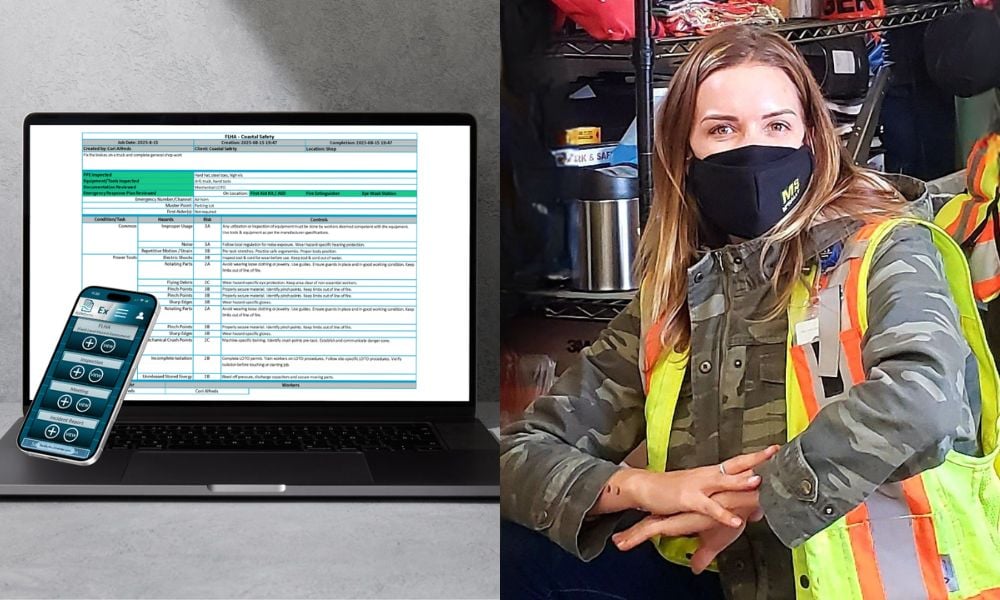
Cori Carroll, founder of Calgary-based Flowforms, has spent her career navigating an uncomfortable paradox: Canada spends more on workplace safety than ever before, yet serious incidents and fatalities remain stubbornly high. After years working in oil and gas and construction, including time in the field while nine months pregnant, Carroll believes she's identified the problem.
Documentation dilemma
"We've spent the most amount of money on safety that we've ever spent on safety as a whole, as an industry within Canada. But we're still having workplace fatalities," Carroll said in a recent interview. "I started to realize that there are some patterns emerging and it doesn't matter what industry...the way we've been doing things isn't actually working."
The issue, according to Carroll, is that existing safety software simply digitized paperwork without addressing the fundamental problem: field workers view safety documentation as a checkbox activity rather than a valuable tool.
"All it did was move the issues that we were having from a piece of paper onto a screen," she explained. "A lot of them feel that it's not necessarily a valuable tool. It's a checkbox activity that we have to do because our manager says so."
A different approach
Flowforms takes a different approach. Rather than requiring workers to complete lengthy forms, the platform guides users through a simplified process where they select their work scope and receive auto-populated hazards and controls based on professional safety expertise. The system then automatically sends relevant safety documents, including tailgate talks, safe work practices, and job safety analyses, directly to workers' emails.

"The idea is you have a safety advisor helping you, standing over your shoulder, helping guide your safety decision-making process," Carroll said.
The platform is designed specifically for tradespeople who may have limited formal education and relies on smartphone accessibility rather than tablets or complex interfaces. Carroll deliberately breaks down overwhelming tasks, like building a house, into manageable, bite-sized pieces that make hazard identification less daunting.
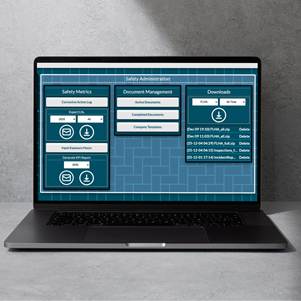
"Trying to find the hazards and controls for building a house is very overwhelming. There's so many aspects to it," she noted. "What we do is we break down that process for you."
Only woman in the room
Carroll's perspective is informed by her experience as a woman in male-dominated industries. For most of her 15-year career, she was typically the only woman on site.
"I remember not too many years ago, standing in a room, there were 54 men and myself as the only female. That was a defining moment in my career because I literally did have a seat at the table, and I felt like I had to work very hard to get there," she said.
That experience shapes her hiring philosophy. Carroll's five-person team is predominantly female and includes new mothers, caregivers, and newcomers to Canada, populations often overlooked in both safety and tech sectors.
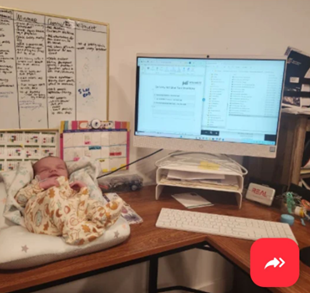
"For me, after I had my baby, he's beside me, I'm working, he's in his crib, and I'm working away. And normally, you would think that that would be a time that I would be not someone you'd really want on your team," Carroll said. "But for me, that's actually when I built Flowforms."
Supporting innovation
Recently recognized as a top woman in safety by Canadian Occupational Safety, Carroll advocates for supporting small businesses and innovators rather than established players focused primarily on shareholder profits.
"If we constantly just go with the status quo and we're constantly going towards people who are very open that their main goal is to increase shareholder profits, we're going to get what we pay for," she said. "If we start to look at companies who are trying to make things better and their main value is to improve workplace safety...those are people we should look at and try and support."
Carroll also believes the industry needs to shift focus from administrative controls to engineering controls and embrace human and organizational performance (HOP) principles that acknowledge human error while minimizing its severity.
For Carroll, meaningful safety improvements will come from worker-centric design that fits naturally into how work is already done. Not more paperwork, but smarter support at the point of work.
This article is part of our Monthly Spotlight series, which in March focuses on Technology and Innovation.