PPE veteran warns uncertified Type 2 helmets are entering the market as the Canadian Construction Safety Council mandate takes hold
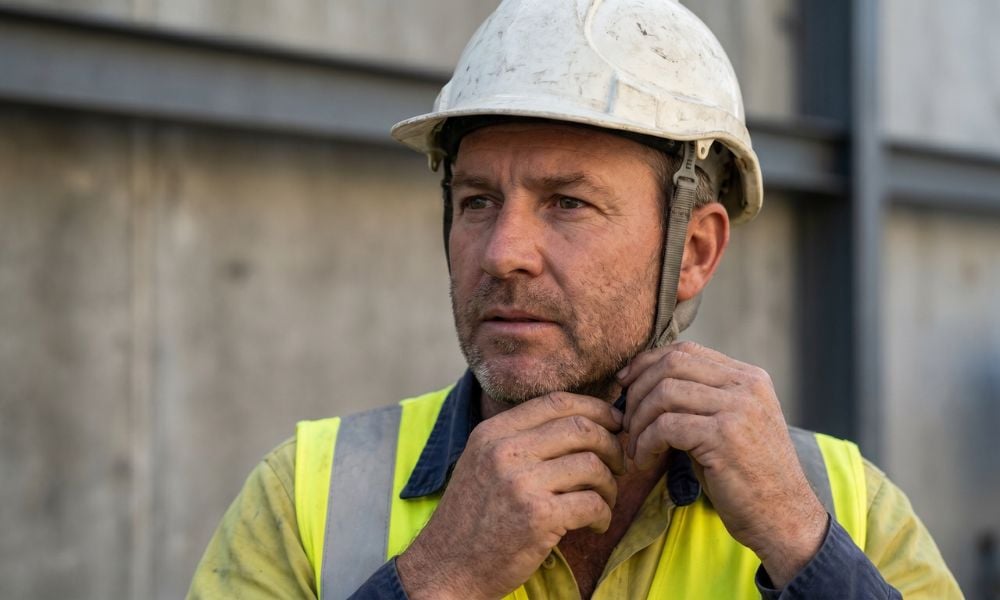
As Canadian construction firms rush to comply with the Canadian Construction Safety Council's (CCSC) Type 2 safety helmet mandate, one industry veteran is sounding the alarm on a risk that has nothing to do with the helmets themselves: the difference between certified products and those that merely claim to meet a standard.
Claudio Dente, president, CEO, and co-founder of Dentec Safety Specialists Inc., a Canadian PPE manufacturer based in Ontario, spoke exclusively with Canadian Occupational Safety about the procurement pitfalls he is already seeing in the market, the nuances of the chin strap debate, and why a hazard assessment should come before any purchasing decision.
"The industry's had an epiphany that we should move to Type 2 hats," Dente said. "And that is a great movement. But this has been around since 2005."
Certified versus 'meets' standard: a critical distinction
Dente's biggest concern is not the mandate itself but the confusion it is generating around product certification. Under a certification model, a third-party body such as the CSA Group audits manufacturers quarterly, reviews raw material sourcing, conducts annual reviews, and performs unannounced surveillance testing by purchasing products from the open market.
A product that carries the CSA logo has passed that ongoing scrutiny. A product labelled "meets CSA" or "meets ANSI" (the American National Standards Institute) has not.
"If you have a certified product, there is a mandatory requirement for quality control," Dente said. "Quarterly audits by the certifying body to ensure that the head protector is designed and manufactured in the way that it was tested."
A self-declared product faces no such oversight. Manufacturers can change raw materials, alter components, and reduce costs without triggering any re-testing requirement. Dente has tested products imported from overseas that carry "meets" claims and fail standard requirements.
"We have manufacturers importing product into the market that's not CSA or ANSI certified and they're saying 'meets CSA' or 'meets ANSI,'" he said. "And the problem is the distributors they sell it through are presenting it as certified. The end user then has a false sense of understanding."
The label distinction is straightforward once you know what to look for. A certified product carries the CSA logo alongside the standard number. A self-declared product carries only the letters "CSA" and the standard number in plain text, with no certifying body logo. Safety leaders responsible for procuring compliant personal protective equipment for their workforce should check labels carefully before purchasing.
"I can't tell you how many times someone said to me, 'this harness is CSA certified,' and I say, 'no, it's not,'" Dente said. "And they say, 'yeah, the manufacturer told me it is.' Look at the label. These distributors have been selling this product for years thinking it's CSA certified. That's what we have to clean up in the industry."
The chin strap debate
Dente also pushes back on the assumption that mandating chin straps is straightforwardly beneficial. His position: suspension quality matters more than the presence of a strap.
The CSA standard includes a retention test in which a helmet is mounted to a head form and force is applied to lift it off. A helmet that fails this initial test does not proceed to impact or penetration testing. Well-designed helmets with quality ratchet suspensions, Dente argues, already meet a high retention threshold without a chin strap.
"My recommendation is: do a hazard assessment, determine whether you need a chin strap or not," he said. "When selecting your head protector, make sure you select one that has a well-functioning ratchet suspension. I do not recommend the use of pinlock suspension."
The concern is not hypothetical. Dente points to a pattern he has observed on construction sites: workers wearing chin straps so loosely that they provide no practical retention benefit, creating a false sense of security. He draws a parallel to hockey helmets, noting that players routinely fail to fasten chin straps snugly enough to provide meaningful protection.
"You'll see people wearing chin straps very loosely, hanging down low on the neck," Dente said. "If you don't fasten it properly, you're going to get sloppiness on the fitting, especially if the suspension is a poor fitting suspension."
Safety professionals navigating the transition to Type 2 helmet requirements across Canadian job sites should weigh both suspension quality and strap fit when evaluating products.
What employers should do now
Ontario's Ministry of Labour has signalled it will require Type 2 head protection on construction sites by July 2027. Other provinces have not yet confirmed timelines. Dente advises employers not to wait for regulatory pressure, but to approach the transition methodically.
His recommendations are direct. First, select a CSA-certified product, not simply one that claims to meet the standard. Second, conduct and document a hazard assessment for each application, particularly for ground-level work such as paving or road construction where the case for lateral impact protection is less clear-cut. Third, do not assume chin straps are always necessary if a well-engineered ratchet suspension already provides adequate retention.
"Why would you not offer a higher protecting PPE device like a Type 2 helmet if it's not ridiculously priced?" Dente said. "Conduct your hazard assessment. If you don't believe your application calls for a Type 2, document it so that when an inspector comes on site, you have the information to present. You have no liability to the company."
Employers seeking guidance on conducting workplace hazard assessments for PPE selection in Ontario can consult provincial occupational health and safety regulations directly.
"I just challenge the end user to make sure they do their homework when looking at particular types of products," Dente said.