The CCSC's July 1 deadline is reshaping construction head protection and how the industry thinks about traumatic brain injury prevention
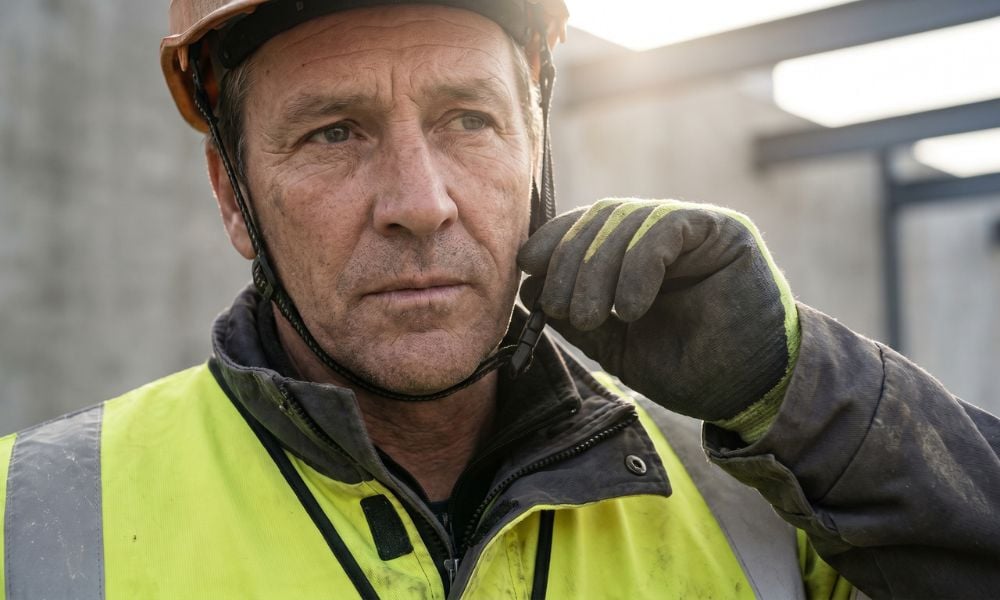
As of July 1, 2026, the Canadian Construction Safety Council (CCSC) requires all workers, subcontractors, and visitors on member job sites to wear Type 2 safety helmets with integrated four-point chin straps, one of the most significant shifts in construction head protection in Canada in decades. Ryan Barnes, founder and CEO of Sherwood, Oregon-based safety helmet company STUDSON, spoke exclusively with Canadian Occupational Safety ahead of the deadline.
"If you look at the data, most head injuries come from six feet or less from slips, trips, and falls," Barnes said. "There's a huge misconception that you only need good head protection or a Type 2 or a chin strap if you work at height. That's not true. That's not what the data shows."
The CCSC cited Virginia Tech research showing Type 2 hard hats reduce the probability of concussion by 34 per cent and skull fracture by 65 per cent. Traumatic brain injuries account for approximately 25 per cent of all construction-related fatalities, more than half of which result from falls.
The case against the traditional hard hat
The standard hard hat has barely changed in a century, and Barnes argues the industry has been operating with a tool never designed for the full range of hazards workers face.
"The hard hat was invented 100 years ago and it was designed for bumps and falling objects," he said. "Somewhere in the ballpark of 13 to 15 per cent of head injuries come from dropped objects. The rest come from a huge percentage at six feet or less."
Major PPE manufacturers, Barnes said, have historically treated head protection as a low-priority category. "The Bullards and the MSAs and the 3Ms: this is just a sliver of their total business," he said. "They have hundreds of thousands of SKUs. I think they were a little asleep at the wheel."
That inattention, combined with a cultural resistance to acknowledging risk on the job site, has contributed to the slow pace of change. One example: a STUDSON brand ambassador suffered a traumatic brain injury but tried to conceal it.
"He jumped up, walked across the job site, didn't want anyone to know he bumped his head," Barnes said. "His boss noticed. He thought he looked drunk because he had just suffered a traumatic brain injury and didn't realize it."
Winning over workers
Barnes acknowledges the transition will require more than policy. Education, he argues, is the critical factor. Safety leaders can draw on proven approaches to building a strong safety culture in construction as their workforces make the switch.
"Rather than forcing change on your people, bring them some education at the same time and answer the why," Barnes said. "For those of us who sit behind a computer and look at spreadsheets and look at the data, most of these guys don't. For them, all they really care about is look, comfort, and breathability."
The chin strap is the most common point of resistance, but Barnes says the adjustment is short-lived, much like the seatbelt.
"You wear it for a few days and you forget that you're even wearing it anymore," he said. "We have so many examples of the resistance, and then after they've trialled it for a week, they don't want to give it back because it's more comfortable, it's more secure."
Modern Type 2 helmets borrow heavily from action sports technology. "There's been a lot of developments inspired from ski helmets and bike helmets," Barnes said. "They have ionic pad sets and moisture wicking and antimicrobial stuff that your traditional hard hat never had." STUDSON's "high bar technology," launched roughly a year ago, addresses the chin strap friction issue with a design that contacts only the area beneath the chin.
Compliance and what comes next
STUDSON's SHK-1 Full Brim Dual Cert helmet carries both the ANSI/ISEA Z89.1 and CSA Z94.1 certifications, making it one of the few products on the market certified under both American and Canadian standards simultaneously. PIP Canada is also offering Type II helmet that complies with the standards.
Emil Anderson, a general contractor already using STUDSON helmets across its Canadian operations, has seen direct results from the switch. In a statement provided by STUDSON, Steve Howe, vice president, health and safety, Emil Anderson, said the transition has been straightforward. "We have seen firsthand the benefits of transitioning away from traditional hard hats to STUDSON Type 2 safety helmets. The fit is comfortable, the chin strap stays in place, and knowing they are certified on both sides of the border simplifies procurement."
Barnes sees the mandate as a tipping point. Safety leaders can follow updates on CCSC and Canadian construction site safety requirements as implementation details continue to develop.
"One of our goals from the very beginning was to raise the bar of what people expect: what their expectation is for how they protect themselves," Barnes said. "You can break an arm, you can smash a shoulder or smash a toe. You can't smash your head and necessarily think that you're going to bounce back the next day without some type of longer-term ramifications."