

New Parkland Institute research finds Alberta regulators let COVID-19 spread unchecked at Cargill plant
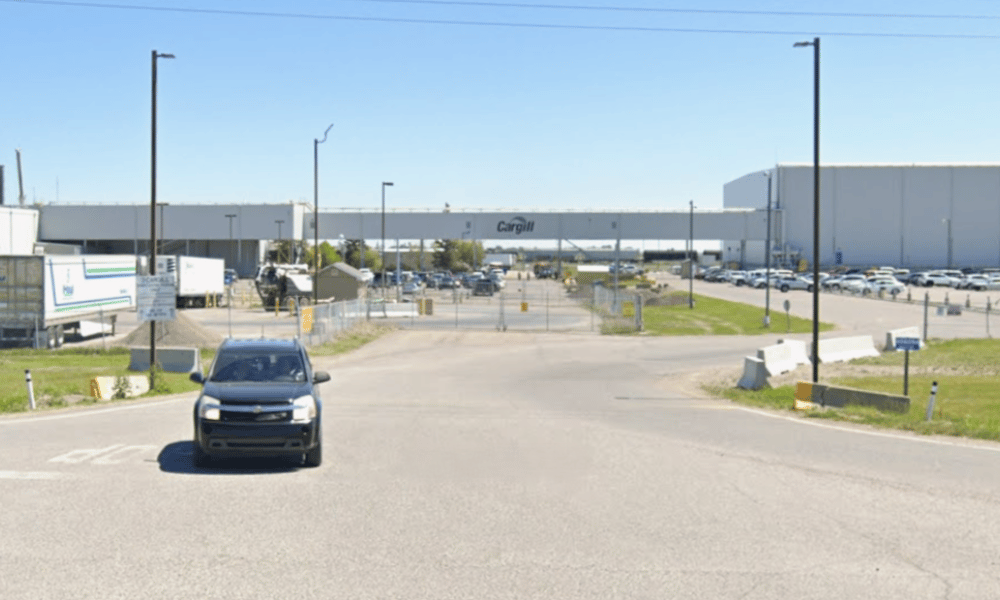
A new report from the Parkland Institute says Alberta's occupational health and safety (OHS) system suffered a "catastrophic breakdown in regulatory oversight" during the 2020 COVID-19 outbreak at Cargill's beef-processing plant in High River, one that let the virus tear through the workforce for weeks before the plant closed. Released Sept. 28, co-authored by Sean Tucker, a professor of occupational health and safety at the University of Regina, and Jason Foster, director of the Parkland Institute and a professor of human resources and labour relations at Athabasca University, Essential and Expendable: How Alberta's COVID-19 Response Failed Cargill Workers draws on freedom of information requests and testimony from a 2024 labour arbitration.
More than 950 Cargill workers, nearly 45 per cent of the plant's workforce, tested positive that spring, according to the report. Two workers died of the virus and four of their close contacts also died, for six deaths connected to what was then the largest single-site industrial COVID-19 outbreak in North America, the report says.
Freedom of information requests reveal what public health knew
Tucker said the documents show Alberta Health Services (AHS) knew the plant's $500 attendance bonus was pushing sick workers to come in, and that transmission was occurring inside the plant, well before officials said so publicly.
"What we found, which was most troubling, is that within public health, within Alberta Health Services, they knew that the virus was spreading within the plant," Tucker said. "They knew from multiple cases that were brought to their attention that Cargill's attendance bonus was encouraging workers, some of whom were ill, to come to work, and that was leading to spread within the plant."
Despite that knowledge, then chief medical officer of health Dr. Deena Hinshaw told a workers' town hall on April 18, 2020, two days before the plant closed, that transmission was occurring in households and carpools, not on the line. That same evening, Hinshaw privately asked for a breakdown of exactly how much spread was workplace-related, the report says. Tucker said the public explanation had no basis in the data AHS already held, and it had consequences.
"It wasn't certainly public health's intention to create conditions that would lead to racist kind of reactions and othering of these workers, but that's ultimately where this led," Tucker said.
A second gap emerged when the plant reopened on May 4. Tucker said OHS officers wore N95 respirators and face shields for their own inspection that day, while workers were still issued only surgical masks. When a colleague flagged that the inspecting officers would wear N95s, Hinshaw reportedly asked why "labour reps" needed them at all.
"Clearly OHS officers, who are deemed essential workers, are concerned that aerosol transmission is an issue," Tucker said. "They're charged with ensuring compliance with OHS regulations, and they're not doing it. The chief medical officer of health apparently holds the view that aerosol transmission is not a risk. It's a clear example of regulatory failure, one of many examples of regulatory failure."
The report also traces political pressure on regulators, noting the Alberta Cattle Feeders Association began lobbying then-agriculture minister Devin Dreeshen to have the sector declared essential within days of the province's public health emergency declaration, a designation Tucker said made clear no regulator would be allowed to close the plant.
"What we see here in Cargill is profits, business continuity placed high above worker safety," Tucker said, adding that most of the plant's workforce were newcomers to Canada, temporary foreign workers, or otherwise racialized and precarious. "If this workforce were white and if they were Canadian citizens, the response would have been much different, in our opinion."
Alberta government and Cargill respond
In a statement emailed to The Globe and Mail, Hunter Baril, press secretary to Joseph Schow, Alberta's minister of jobs, economy, trade and immigration, said the government is reviewing the report and "will take its findings into consideration." A Cargill spokesperson gave a similar response, saying the company was reviewing the report's findings and would take them into consideration.
Neither AHS nor Alberta OHS, both examined directly in the report, had issued a public statement responding to its findings as of publication.
Report calls for apology and legislative reform
The report's 36 recommendations open with a call for the Alberta government to apologize to Cargill's workers and their families, alongside a provincial auditor's review of current OHS staffing and practices, and legislation making OHS the clear lead on workplace safety during any future public health emergency.
"Our number one recommendation in our report is a sincere public apology from the government of Alberta," Tucker said. "They need to recognize this, and workers need to hear that from them."
Tucker said the lessons extend well past one province. Canada has never conducted a comprehensive national review of enforcement gaps in pandemic-era workplace safety, even as other jurisdictions dealt with their own outbreaks, and gaps identified decades earlier in Ontario's response to SARS went largely unaddressed by the time COVID-19 reached Alberta. As provinces continue refining their own Occupational Health and Safety Act legislation, Tucker argues the workforce most exposed to enforcement gaps like these, including migrant and temporary foreign workers facing safety concerns, needs those lessons applied before the next emergency, not after.
"We hope that the recommendations in our report are taken seriously by the government of Alberta and other jurisdictions in Canada to properly prepare for the next pandemic," Tucker said.