National union president says over 600 members are off work as the union seeks Veterans Affairs clinic access

Correctional officers rallied in Ottawa on Nov. 24, 2026, calling on the federal government to grant them the same access to psychological trauma treatment already available to military veterans and the RCMP, as their union reports more than 600 members are currently off work with psychological injuries.
Members of the Union of Canadian Correctional Officers (UCCO-SACC-CSN) timed the demonstration to coincide with a national Correctional Service Canada (CSC) managers’ conference taking place in the capital. Frédérick Lebeau, national president of UCCO-SACC-CSN and a serving correctional officer currently on leave for his union role, said the timing was deliberate.
“We were there because all the managers, all the group from the country coast to coast came to Ottawa to discuss leadership,” Lebeau said in an interview. “For us, it was very important to let them know that leadership is one thing, but at the end of the day, we’re living in crisis inside our walls.”
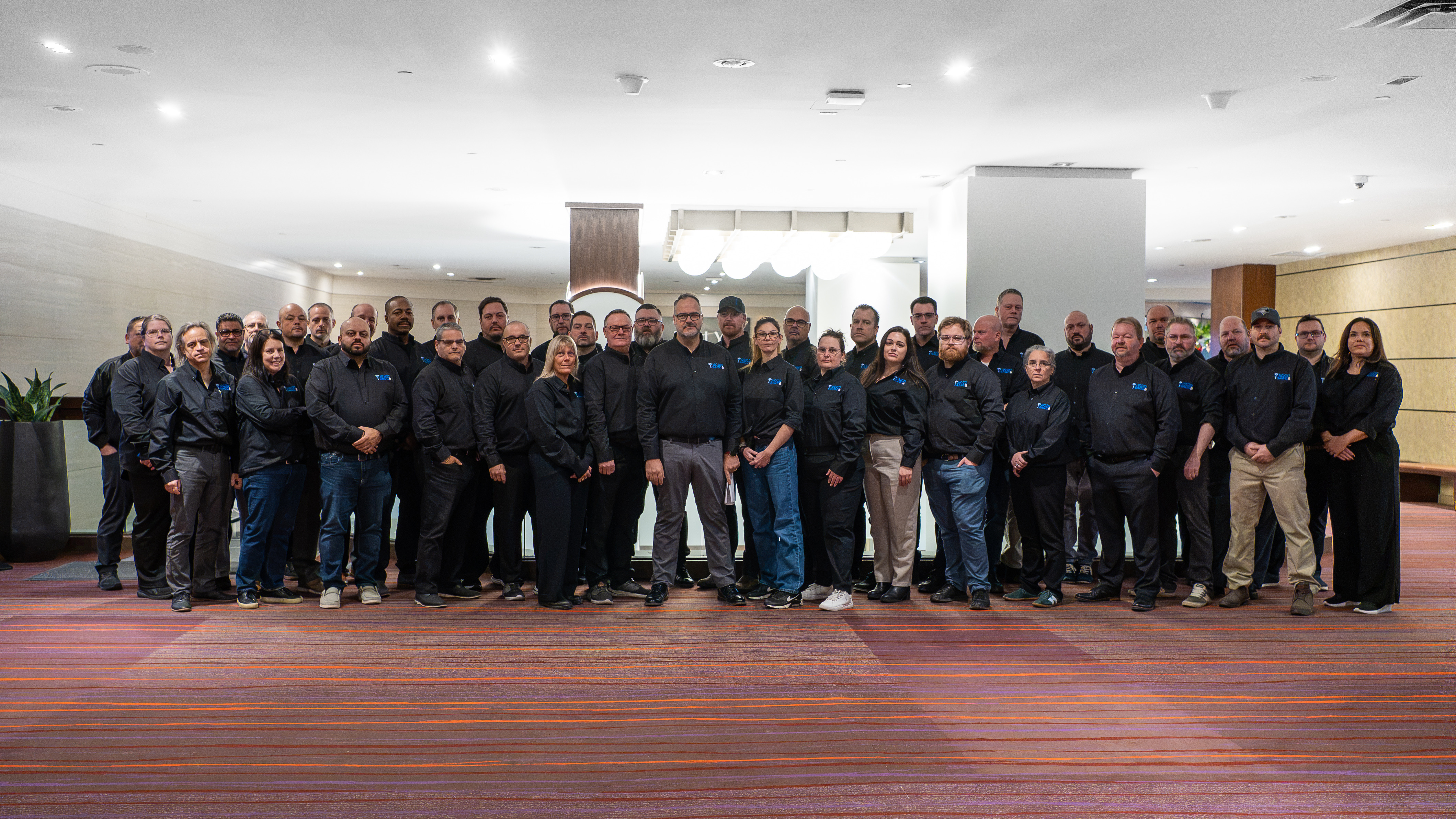
(Correctional officers in Ottawa on Tuesday November 24, 2026. Source: Union of Canadian Correctional Officers)
A daily reality of violence
Lebeau described conditions inside federal institutions that he said have deteriorated sharply, which he attributed to funding cuts and aging infrastructure that leave officers at a disadvantage.
“Almost every single day, a correctional officer in the country is being assaulted by an inmate,” he said. “We’re seeing a rise in violence. We’re having less and less inmate accountability. There’s not a single day we’re not having a major seizure with arms, with cell phones, drugs.”
Drone deliveries of contraband have become a near-daily occurrence, Lebeau said, describing detection technology he called inconsistent. “We cannot shoot them down by law, so we just need to see them unload their package or land on our premises,” he said, adding that officers are often racing inmates to intercept drops before drugs disappear into the institution. He said the loads typically include hashish, methamphetamine, crack cocaine and PCP, alongside weapons and cell phones.
Lebeau recounted a mental health crisis involving an inmate that he responded to personally and that turned violent. “I received urine in my face,” he said. “Your whole day, your whole journey changed on a dime. You don’t know what’s going to happen afterwards.” He said other officers have suffered more serious physical injuries, including one who was bitten and nearly lost part of an ear, injuries that sit alongside a broader look at how first responders access post-traumatic stress treatment in Canada.

The push for Veterans Affairs access
The union’s central demand, submitted as part of its current collective agreement proposal to Treasury Board and CSC, is access to Veterans Affairs Canada’s Operational Stress Injury (OSI) clinics: specialized treatment currently available to military veterans and, through a memorandum of understanding, to RCMP members.
“We are having more than 600 correctional officers who are off on PTSD, on stress, on burnout, on physical aggression,” Lebeau said. “The only access that we’re having is just like a simple EAP that they’re giving to all the public sector. It’s not enough. We need a better treatment, better access to treatment.”
The scale of the problem is well documented. A 2018 study led by University of Regina psychologist R. Nicholas Carleton, published in The Canadian Journal of Psychiatry, found 54.6 per cent of surveyed Canadian correctional workers screened positive for symptoms consistent with at least one mental disorder, compared with approximately 10 per cent in the general population, among the highest rates recorded for any Canadian public safety occupation studied to date.
A patchwork of oversight once officers are hurt
Lebeau also pointed to a gap he said compounds the problem once officers are hurt. Correctional officers fall under the Canada Labour Code while on duty, he said, but once injured, they are subject to provincial workers’ compensation systems that vary by jurisdiction, a patchwork that mirrors gaps in federal workplace safety enforcement raised in a separate report.
“Everywhere across the country, we’re having different sets of rules, different approaches, different OSH tribunals,” he said. “If it’s in Quebec, it’s something different than Ontario.”
The union is separately raising concerns about the federal pension structure. Officers can retire after 25 years without penalty, Lebeau said, but receive only 50 per cent of their pension, compared with 70 per cent for those who complete the full 35-year term.
“Doing 35 years in these conditions doesn’t make a lot of sense,” he said.
Lebeau said he wants health and safety leaders outside the correctional system, including those overseeing workplace violence prevention programs in federally regulated industries, to understand how the sector’s risks compound across a long career. “We’re not only correctional officers on the day shift,” he said. “During evenings, weekends and night shifts, we’re starting to have a different role. We can become like a nurse, a first responder, almost a psychologist.”
UCCO-SACC-CSN represents more than 7,300 members across 49 federal correctional facilities, according to the union.