Institute for Work & Health scientist Dr. Arif Jetha maps the biggest occupational health and safety shifts coming by 2040
By 2040, declining trust in institutions, a rapidly aging, multigenerational workforce and the deep integration of artificial intelligence into daily work could fundamentally reshape occupational health and safety (OHS) in Canada, according to new findings presented by Dr. Arif Jetha, associate scientific director and scientist at the Institute for Work & Health (IWH). Speaking this week as part of the IWH Speaker Series, Jetha shared results from a horizon scan that identified seven major changes expected to shape the future of work and worker health over the next 15 years.
Jetha, who is also an associate professor at the University of Toronto’s Dalla Lana School of Public Health, co-led the study with OHS experts from British Columbia, Ontario and Europe. The team used horizon scanning, a structured method of gathering evidence from peer-reviewed research as well as news reports, podcasts and more speculative “fringe” sources, to flag signals of change and project how they might affect worker health and safety. The findings build on an earlier industry survey on how safety leaders are adopting artificial intelligence, which Jetha also led.
Trust, aging workforces and the future of work
The first major change Jetha’s team identified was declining trust in institutions. “If workers don’t trust employers, regulators, or even health systems, they might be less likely to follow safety guidance,” Jetha said, adding that younger workers are increasingly turning to social media over traditional experts for health information. For employers, the implication is strategic as much as operational: compliance frameworks built on the assumption that workers trust regulators and employers may no longer hold by 2040.
The second change centres on workforce longevity. By 2040, Jetha said, many countries could experience “superaging,” with a significant share of workers over the age of 65, alongside up to five generations working side by side, each with different expectations and relationships with technology. “We found an emergence of resources discussing the potential importance of dementia-friendly accommodations for elderly workers,” he said, pointing to early signals of how inclusion strategies are already starting to shift.
Climate change and deep AI integration reshape hazards
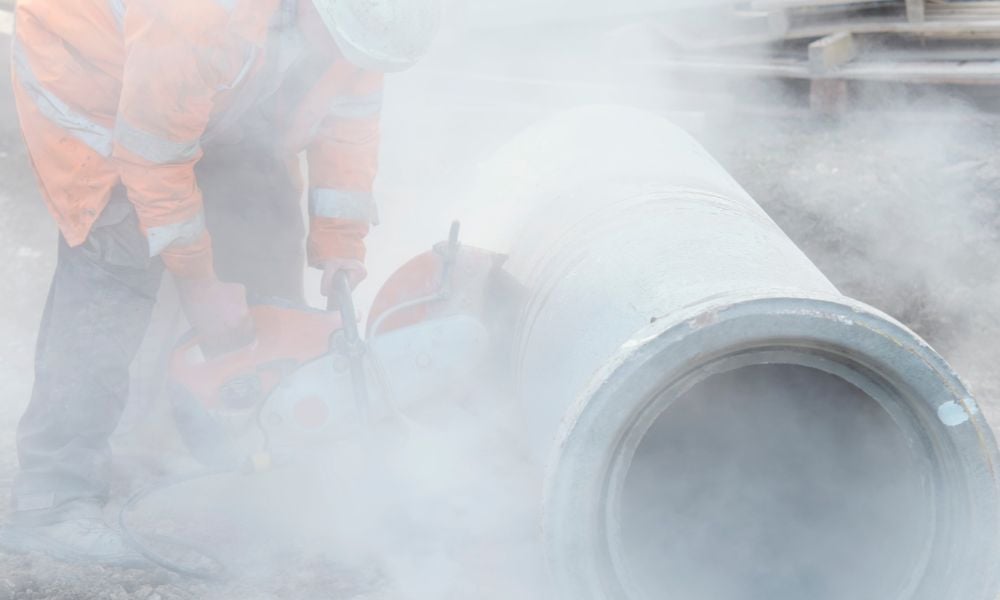
Climate change emerged as the third major trend. “Extreme heat, poor air quality, wildfires, and other hazards could push working conditions beyond safe limits, especially for those working outdoors,” Jetha said. He also pointed to a parallel “disaster economy” of new climate response jobs, each carrying its own emerging safety risks, and to aging infrastructure that will need climate-resilient upgrades.
The fourth, and arguably most consequential, trend for employers is the deep integration of artificial intelligence into working life. Jetha’s research into AI’s growing role and uneven impact on Canadian workplaces has already tracked how the technology is reshaping job quality and gender equity. In the 2040 scenario, he said, “we could see AI moving beyond a tool to more of a coworker, changing workplace dynamics and even organizational structures,” raising new questions about digital fatigue, constant performance monitoring and privacy intrusions.
Isolation, conflict and the end of stable employment
Three further trends point to mounting social and economic pressure on the labour market: rising social isolation tied to men’s mental health and workplace conflict; growing geopolitical hostility spilling into economic, digital and informational threats, including cybersecurity; and a decline in stable employment as gig work, fractional roles and corporate consolidation push more workers outside the traditional frameworks safety systems were built around. “The rising cost of doing business may limit small and mid-sized employers’ investment into health and safety, creating uneven protections across the labour market,” Jetha said.
What should employers do now?
Jetha was candid that the exercise, carried out through recurring workshops the team called “SCAN clubs,” skewed toward identifying risks over opportunities, a tendency he said is “kind of inherent in us to identify hazards and risks as a way to plan for the future.” The team deliberately avoided academic protocols in favour of open-ended signal gathering. “Go out into the world... pay attention when you’re reading the newspaper. Look at Reddit or Twitter,” Jetha said, describing an intentionally open-ended approach to spotting early signals.
For organizations weighing where to start, Jetha pointed to governance structures already emerging around AI adoption, including arrangements he described as similar to a joint health and safety committee, but focused specifically on AI adoption, giving both employers and workers a say in how tools are deployed. That kind of structured oversight echoes the guardrails already emerging around AI use in Canadian workplaces, and reflects a broader shift toward treating foresight as an operational discipline rather than a one-time exercise.
Jetha closed with a challenge to the field. “Occupational health and safety professionals are not just responders to change,” he said. “We need to be architects of the future.”