
TSB investigation into 2024 CPKC derailment near Brooks, Alberta, points to missed warning signs and weakened safeguards
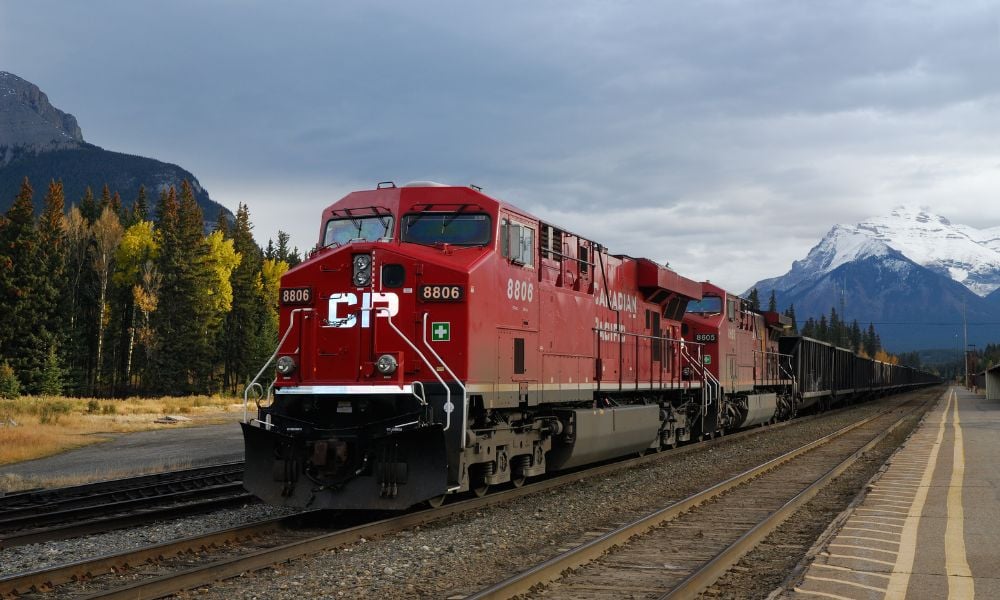
The derailment of a CPKC freight train near Brooks, Alberta, is giving rail employers and safety professionals a stark reminder about how small gaps in maintenance, training and communication can combine into a major incident.
Protections only work if you keep them on
At the heart of the Transportation Safety Board of Canada (TSB) investigation are three big safety lessons: know your mechanical risk signals and act on them quickly; make sure the people giving technical direction are fully trained and supported; and don’t leave critical protections—like speed‑sensor‑based locked‑axle alarms—disabled without clear, well‑understood procedures.
On February 5, 2024, a westbound mixed‑merchandise train operated by Canadian Pacific Railway Company, doing business as CPKC, derailed on the Brooks Subdivision. The trailing head‑end locomotive and 17 intermodal cars, representing 41 platforms, came off the track at Mile 65.8. Some of those cars were carrying dangerous goods, but the TSB notes they “did not breach or release their contents” and no one was injured.
How the derailment unfolded
The trouble didn’t start in Alberta. Two days earlier, while the train was crossing CPKC’s Ignace Subdivision in Ontario, a track engineering foreman standing beside the line noticed smoke coming from the trailing head‑end locomotive KCS 4767 and alerted the crew. Investigators found the smoke was coming from traction motor #4, and the locomotive engineer initially isolated the locomotive as a precaution.
In keeping with company rules, the engineer called the rail traffic controller, who consulted a director of operations. The train was stopped and the crew was instructed to check for oil leaks, signs of fire and any indication the axle might be locking. The designated mechanical authority on duty—a supervisor mechanical (locomotive), or SML, in Winnipeg—was also to be contacted.
Using the locomotive’s computer‑based control monitor, the engineer cut out traction motors #4 and #5, removing them from providing tractive effort, and then spoke with the SML. After consulting his own supervisor, the SML confirmed the actions were appropriate, advised that the locomotive did not need to remain isolated and allowed the train to continue, with instructions to monitor the situation.
A key decision point came next. The engineer asked whether the speed sensors for those traction motors should also be cut out. According to the report, the SML left that choice to the engineer. The engineer decided to proceed and removed the speed sensors for traction motors #4 and #5 from service.
That change mattered because the ES44AC‑series locomotive relies on those sensors to support functions such as wheel‑slip and locked‑axle protection. The TSB describes how the control monitor itself carried a warning that “Locked [Axle] Protection [is] Reduced Due To Speed Sensor Cutout” when those sensors are disabled. With the sensors cut out, the locomotive could no longer detect and automatically respond to a locking axle on #4.
From there, the train continued west, changing crews several times and passing maintenance facilities in Winnipeg and Moose Jaw without being sent for shop inspection or repair. Internally, the initial issue was recorded as traction motors #4 and #5 being cut out, but there was no specific mention in the documentation that their speed sensors had also been disabled.
On the morning of the derailment, wheel‑temperature detectors along the Brooks Subdivision repeatedly picked up abnormal readings on the #4 axle of KCS 4767, with temperatures far higher than the other 10 locomotive wheels. The TSB found those values were consistent with an axle that was not rotating freely and whose wheels were intermittently locking.
When the train finally went into emergency near Brooks, subsequent track inspection uncovered broken rail and, on the locomotive, heavy damage to both wheels of the #4 wheelset—damage the Board says was “consistent with an axle not freely rotating and intermittently locking up.”
Latent defects and limited training
A deeper mechanical teardown revealed the underlying defect. The gearcase on traction motor #4 contained very little oil, and a pinion‑end bore seal had been pinched. Over time, that allowed oil to escape, starving the bearing of lubrication until it seized. The TSB cites CPKC’s own report, which concluded that an “incorrectly sized gearcase mounting bolt” likely installed after a prior slow‑speed derailment in Mexico pinched the seal and created a leak path.
Earlier opportunities to catch the problem were missed. During an annual inspection in November 2023, shortly after that Mexican derailment, staff documented low gearcase oil on traction motor #4 and added about 3 quarts—roughly 30 per cent of capacity—but there is “no indication that the low oil level prompted a closer inspection” or that the wrong mounting bolt was identified. A pre‑departure inspection in Montréal on February 2, 2024, also did not pick up a leaking gearcase, in part because the gearcase is mounted inboard and is difficult to see from ground level.
Beyond the hardware, the TSB points to organizational and human‑factors issues that will resonate with occupational safety leaders in any sector. The investigation notes that CPKC’s General Operating Instructions once contained detailed guidance on how crews should handle traction motor and speed‑sensor cut‑outs, but that material was removed in a later revision. It also highlights that the SML on duty had been in the role for only about two months, had completed 39 of 57 basic facility‑safety and locomotive‑maintenance modules, and had just two weeks of on‑the‑job training before working independently.
For employers, the case underscores that complex safety‑critical decisions—especially those that disable protective systems—depend not only on equipment design, but on clear procedures, robust training and effective communication between operations, mechanical staff and front‑line crews.