
Thunder Bay advocate Eugene Lefrancois says Bill 105 trades higher wage benefits for weaker protections down the road
Eugene Lefrancois has spent 40 years fighting for injured workers in northwestern Ontario, and he says Bill 105, the Ontario government's proposed overhaul of workers' compensation legislation, hands with one hand while taking with the other.
"We don't want to sacrifice the future injured workers' earnings with the retirement income that's promised," said Lefrancois, president of the Thunder Bay and District Injured Workers Support Group (TBDIWSG), in an interview with Canadian Occupational Safety. "That's a trade-off we weren't involved in."
Bill 105, officially the Protecting Ontario's Workers and Economic Resilience Act, 2026, would raise the Workplace Safety and Insurance Board's (WSIB) loss-of-earnings benefit rate from 85 per cent to 90 per cent of a worker's pre-injury net average earnings, reversing a cut made under the Harris government roughly three decades ago. It would also let some workers apply to continue receiving benefits past age 65. But the bill would eliminate the 72-month "lock-in" that currently protects permanently injured workers' benefit levels from being reopened six years after their injury.
"Getting rid of the lockout, you're going to be surveilled," Lefrancois said. "If you're permanently injured and you have not worked in five years, the board would lock your income at the rate you're getting. Now they're going to constantly surveil you through your income tax and anything you make, because they're going to take it off dollar for dollar, or they'll completely cut you off."
A trade injured workers didn't choose
TBDIWSG was not consulted before the bill's introduction, Lefrancois said, adding that David Piccini, who was Ontario's Minister of Labour, Immigration, Training and Skills Development at the time, called him only after the legislation had already been tabled. "That's when they introduced the bill, and that's the first time I seen it," he said. Piccini left the labour portfolio in a September 10 cabinet shuffle and now serves as Minister of Infrastructure; Trevor Jones, MPP for Chatham-Kent–Leamington and formerly Minister of Agriculture, Food and Agribusiness, has taken over as Minister of Labour, Immigration, Training and Skills Development.
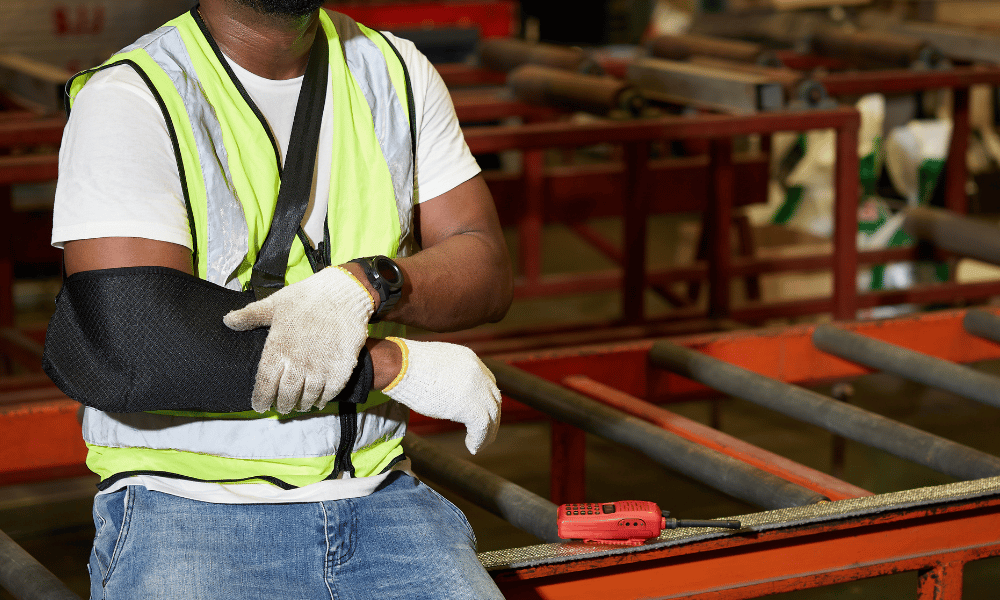
Lefrancois said the removal of the lock-in would leave permanently injured workers facing open-ended reviews until age 65, with no guaranteed floor on their income. "You're not healed when you hit 65," he said. "Your arm didn't grow back. Your back is still broken."
The debate lands weeks after the WSIB cut more than 460 jobs and closed nine regional offices across the province, including roughly 238 positions in northern Ontario, as the board consolidated its claims and account management functions. The Ontario Compensation Employees Union has said the cuts are tied to the WSIB's growing use of artificial intelligence, including a $7.3-million contract for an AI claims-summary tool, a connection the WSIB has not confirmed.
Claim suppression and employer rebates
Lefrancois's criticism echoes longstanding concerns raised elsewhere about how the WSIB manages its finances relative to workers. A 2025 peer-reviewed study found that roughly 40,000 workplace injury and illness reports filed by health-care providers each year are never converted into compensation claims, a gap the WSIB attributes largely to uncovered workplaces and minor injuries. Meanwhile, the WSIB's employer rebate program has returned billions of dollars in surplus premiums to Ontario businesses since 2022, part of a broader reduction in employer costs that advocacy groups say has come without a corresponding gain for injured workers.
Lefrancois said the retirement income trade-off in Bill 105 will matter most to workers who are injured young. "I'm 68 years old. I have to vote for the future," he said. "If my children get hurt, what do they get? They're going to get even knocked off more, and they can't work, and then they're surveilled until they're 65."
He urged non-unionized workers in particular to connect with injured worker support groups operating across the province before they are hurt. "Know what you're getting into before you go to work," he said. "No one plans for this, but it happens to everybody. You cannot do this WSIB by yourself."
Bill 105 passed through the standing committee on finance and economic affairs in late May and is expected to reach third reading when the Ontario Legislature returns in October.