
Custom‑built AI assistant turns vast ergonomic standards into instant, job‑specific guidance for supervisors, engineers and safety staff
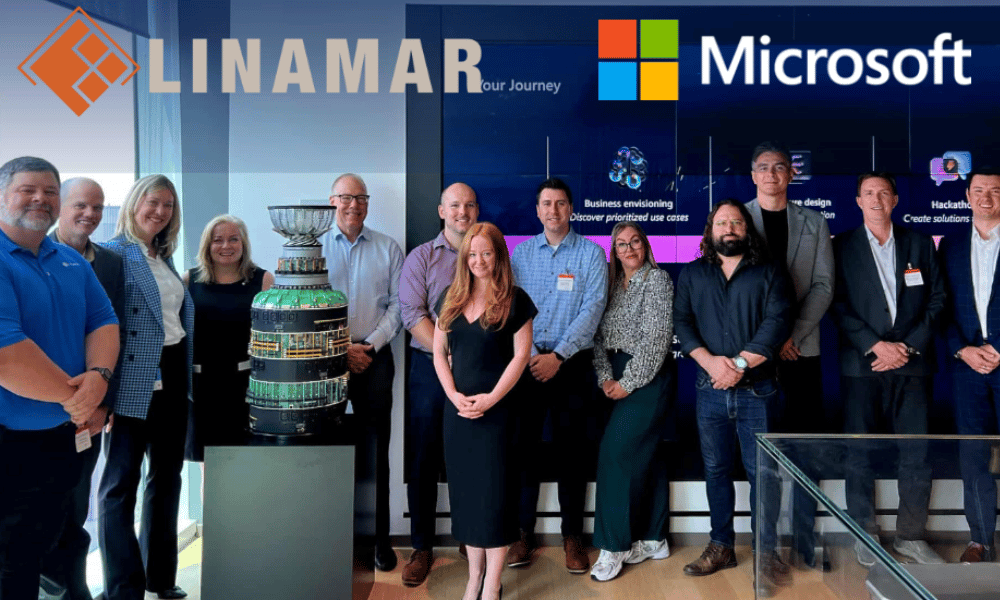
When Linamar began experimenting with generative AI, ergonomics quickly emerged as one of the most promising applications. The Guelph‑based manufacturer has now built an internal virtual assistant that delivers job‑specific ergonomic advice to supervisors, engineers and health and safety staff in seconds, instead of asking them to dig through document libraries or wait for a specialist response.
The tool, known internally as an ergonomics “Copilot” agent, is built on Microsoft Copilot and grounded entirely in Linamar’s own procedures and assessment tools. Melissa Gould, director of environment, health and safety (EHS) for Linamar North America, led the initiative. She describes the agent as “a knowledge source of all of our internal Linamar processes associated with ergonomics,” including the company’s quick‑assessment methodology, the Linamar ergonomic screening tool.
How the ergonomics Copilot works
Rather than acting as a generic chatbot, the ergonomics agent is trained on Linamar’s proprietary ergonomic standards, tools and guidance documents stored in the company’s systems. When a user asks a question about job risk or uploads a photo of a task, the assistant draws on the screening tool’s logic and instructions to generate an assessment or recommendation.
On the shop floor, most production workers do not have company email accounts, so the tool is aimed at the people who plan, supervise and support the work: health and safety professionals, engineers and front‑line supervisors. Access is controlled through a dedicated Microsoft Teams ergonomics site, where anyone with a Linamar email and access to that team can ask questions of the Copilot agent.
A short internal video describes the assistant—branded “Lina Ergo Assist”—as a virtual GenAI agent built in Copilot Studio that scans Linamar’s ergonomic documents and returns a quick summary along with links to the full guideline. The emphasis is on speed at the moment work changes: layout tweaks, tool substitutions, or new product variants that may alter ergonomic risk.
Freeing specialists for higher‑value prevention work
Linamar employs two full‑time ergonomics professionals who previously fielded many of the day‑to‑day questions coming from sites.
“We’ve basically enabled our supervisory, health and safety and engineering teams to ask more simple questions in that agent,” she explains. “So then our team is freed up to focus on larger projects, more preventative actions.”
Before the agent, ergonomic information was already available—but spread across document libraries. Users needed to know the right site, naming conventions and tool to search for. Now, Gould says, the Copilot “does that background thinking for you”: staff type a natural‑language question and the system pulls the most relevant internal resource.
That saves time not only for specialists, but also for the supervisors and engineers who previously had to hunt through shared drives for the right document. “Now you can go to the agent, you can ask the question, and you can get the answer in seconds,” she says.
Trust, adoption and change management
One concern often raised about AI in safety‑critical contexts is whether users trust the output. In Linamar’s case, Gould notes the ergonomics agent is not drawing from the open internet but from vetted internal resources: “It’s pulling from our information that’s specifically Linamar proprietary ergonomic information that’s in our documentation system.”
The bigger challenge so far has been awareness and sustained use in a fast‑moving organization. Gould says the “biggest challenge has continued to be just reminding people that it’s there and getting them to use it,” especially amid a steady stream of other corporate initiatives and information.
To support adoption, Linamar promoted the agent across global best‑practice channels, including its “Online Wisdom of Linamar” (OWL) knowledge‑sharing site, and invited key groups including supervisors, engineers and health and safety teams, into the ergonomics Teams channel by default.
A broader AI journey in safety
The ergonomics Copilot grew out of Linamar’s broader AI rollout, which began when the company made a limited number of full Copilot licenses available in 2025 and asked employees to apply as early adopters. Gould has been using a full license for about a year and says she relies on AI daily for administrative tasks: summarizing unread email, drafting global safety memos and tailoring tone for different regions and business units.
She is more cautious about using AI for technical hazard research, preferring to do her own due diligence, but sees clear value where the technology can remove low‑value friction, like hunting for the right document, so safety teams can focus on higher‑impact prevention work.
For Gould, the ergonomics agent is an example of that principle applied at scale: “By embedding that knowledge into an AI agent, we’re able to answer basic or repeat questions quickly, which frees our ergonomics specialists to focus on more complex, higher‑risk assessments where their expertise adds the most value.”
As Canadian employers explore how AI can fit into their own safety programs, Linamar’s experience suggests the real gains may come not from replacing expertise, but from making existing guidance faster and easier to use, right when and where work is changing.
This article is part of our Monthly Spotlight series, which in March focuses on Technology and Innovation.