'We can do a lot better to promote this profession' says fire safety expert
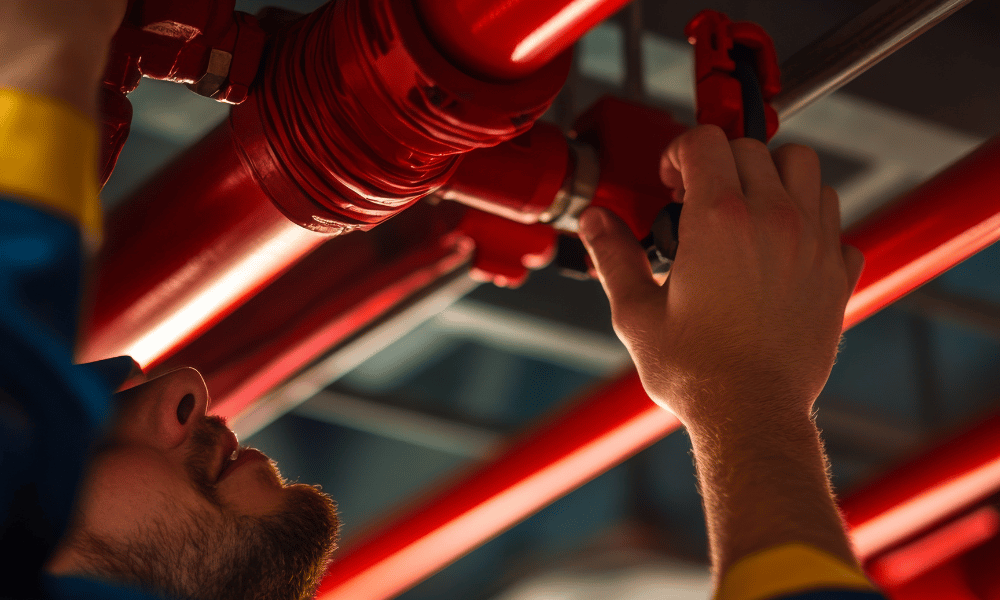
A new national survey commissioned by Classic Fire + Life Safety reveals that while Canadians increasingly recognize the value of skilled trades, careers in fire protection—such as sprinkler fitters and fire alarm technicians—remain largely under the radar.
The “Measuring Up The Trades” study, conducted by Leger in August 2025, builds on last year’s inaugural survey and explores Canadians’ awareness and perceptions of skilled trades, with a focus on fire protection roles. The results show that only 30 percent of respondents are familiar with fire alarm technicians as a career option, and just 22 percent know about sprinkler fitters. Even fewer—just 11 percent—say they would know where to start if they wanted to pursue a career in either field.
Stanley Owah, Talent Acquisition Specialist at Classic Fire + Life Safety, says the survey signals a shift in attitudes toward skilled trades. “The survey found that a lot of people are now primarily looking more into skilled trades. In the past, it looked like skilled trade was not necessarily being promoted more within the industry or outside of the industry, but now students and folks looking to start their careers are now looking more into skilled trades, most especially fire alarm and sprinkler fitting,” Owah explains.
While awareness of fire protection careers remains low, the survey finds that most Canadians view these roles positively. The study also notes a modest increase in the number of Canadians who have strongly considered a career in skilled trades—18 percent in 2025, up from 15 percent in 2024. Job security and hands-on work are among the top reasons cited for considering a trade, with 38 percent and 50 percent of respondents, respectively, highlighting these benefits.
Owah emphasizes the impact and fulfillment that come with working in fire protection. “So, it's not just the career, but also having that mindset that you are actually making an impact, not just to yourself, but also to customers and also people just around. So you are protecting lives, let's put it that way. And in some other sense, you can actually say you're saving lives or preventing any form of disaster that may happen when it comes to, you know, fire disasters and stuff like that,” he says.
Contrary to concerns about skilled trades shortages, Owah notes that interest in fire alarm and sprinkler fitting is rising. “I wouldn't say there's a shortage. However, I would actually say that we have seen a lot of people actually going into Fire Alarm. And we've seen a lot of, I want to tag it as a trainee Fire Alarm coming out of colleges. And right now, we've got a lot of people who have taken the courses, a lot of people who are now looking into getting into that trade, be it on the Fire Alarm side or the Sprinkler side,” he adds.
Classic Fire + Life Safety is responding to these trends by increasing outreach, strengthening ties with educational institutions, and participating in career fairs. The company also runs internship, co-op, and training programs to attract new talent.
For health and safety leaders, Owah offers a call to action: “I would say we can do a lot better to promote this profession. We can primarily talk to people about the impact they make when they actually go into a profession like this, they are working closely with health and safety, whether it be directly or indirectly. They are making sure that people's lives are safe, whether they know it or not, but jobs they're actually doing in the field, they're actually promoting life safety.”
Classic Fire + Life Safety plans to continue commissioning this research to help address workforce shortages and raise the profile of fire protection careers across Canada.