

Emergency crews extracted a man partially buried in grain at a Lakeshore, Ontario, facility on July 2, 2026, in the second grain-related incident in southwestern Ontario this year
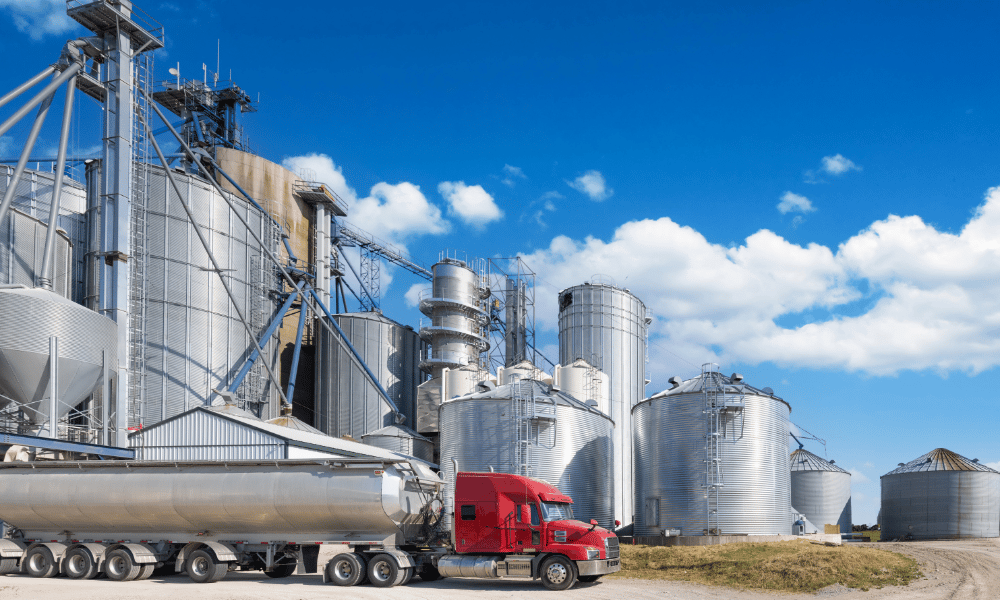
Emergency responders rescued a worker trapped in a grain bin at a facility in the Municipality of Lakeshore, Ontario, on July 2, 2026. The man was partially buried in grain near Lions Club Road and Belle River Road. CTV News identified the site as an Agris grain elevator.
The municipality confirmed that extraction efforts were underway and the worker was not injured at the time of the initial response. CTV News reported the grain bin rescue involved hazardous conditions. The worker was taken to hospital afterward.
Details on how the worker became trapped have not been released. No further information on his condition after transport has been made public.
Second grain incident in southwestern Ontario in 2026
The Lakeshore incident is the second grain-related emergency in the region this year. On February 2, an employee at The Andersons grain facility in Chatham-Kent died in an industrial accident.
Grain bins are classified as confined spaces under Ontario's Occupational Health and Safety Act (OHSA). Employers operating these facilities must maintain written rescue plans and atmospheric monitoring protocols. They must also assign trained standby attendants before any worker enters.
Ontario invested $125 million in a mine rescue training institute in April 2026. The investment underscores the province's focus on emergency extraction capacity across sectors.
Grain bin rescue remains a persistent hazard
Canadian data on grain entrapment is sparse. The Canadian Agricultural Injury Reporting (CAIR) initiative recorded 29 grain suffocation deaths between 1990 and 2008. The Canadian Agricultural Safety Association (CASA) considers that figure an undercount.
CASA's BeGrainSafe campaign reported that farm deaths from grain or soil asphyxiation rose 5.1 percent per year from 1990 to 2015. Between 2011 and 2020, the association counted 27 such fatalities based on media reports alone.
"Grain entrapment is a significant safety risk anywhere that grain is stored – and it can happen in the blink of an eye," said Sandra Miller, executive director of CASA, in a 2025 BeGrainSafe campaign statement.
In the United States, Purdue University's confined space database has tracked more than 1,225 grain entrapment cases since 1964. More than half occurred in corn stored in bins.
What confined space safety rules require for grain bin rescue
Ontario's OHSA requires employers to assess confined spaces for hazards before any worker enters. A written entry plan, atmospheric testing, and assigned attendants are mandatory. Rescue equipment must be available on site.
Workers must wear harnesses connected to lifelines secured outside the bin. CASA recommends a zero-entry approach wherever possible. Equipment such as grain vacuums and augers can reduce the need for workers to enter bins.
Earlier this year, a complex rescue operation freed a trapped worker at a Toronto construction site. That incident highlighted the broader challenge of confined space extraction across industries.
Canada's workers' compensation boards accepted 1,024 work-related death claims in 2024. Agricultural confined space incidents remain a persistent contributor to that toll.
The Ontario Ministry of Labour has not confirmed whether an investigation into the Lakeshore incident is underway.