
Longline lift crash underscores how quickly changing cloud and fog can turn a routine work flight into a deadly emergency
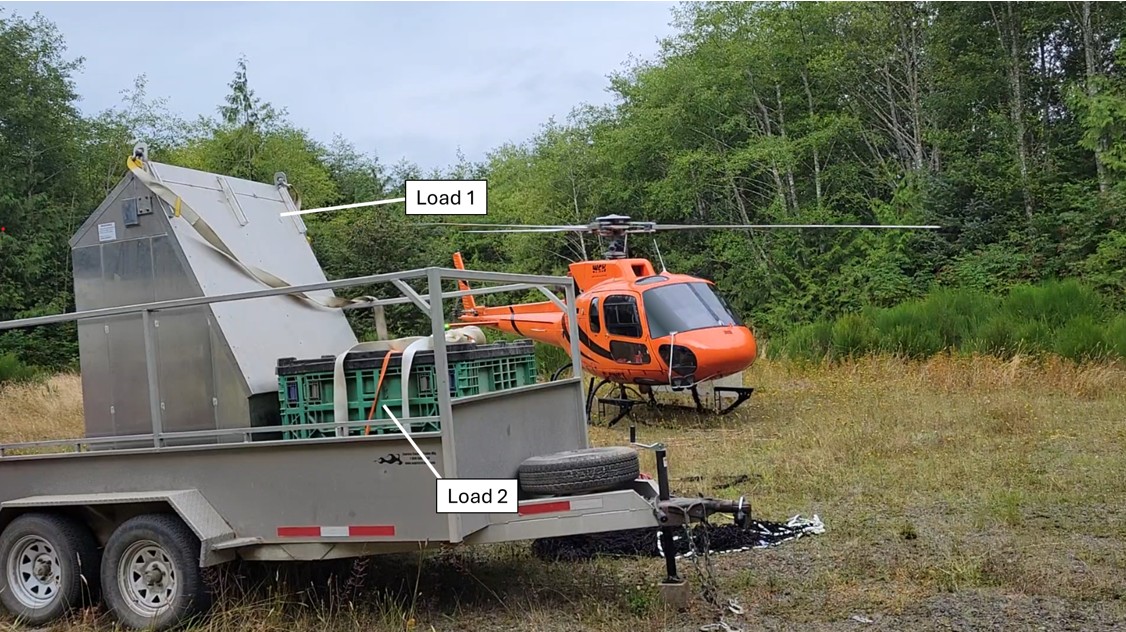
A West Coast Helicopters Maintenance and Contracting Ltd. AS350 B2 helicopter crashed on 15 August 2024 while moving equipment for a remote sensing project about 32 nautical miles southwest of Port McNeill, B.C.
The day’s plan called for nine short flights, but only three were started. After an initial trip to the job site, the pilot flew to a nearby staging area where two external loads were prepared. One weighed about 1,400 pounds and the other about 600 pounds.
Routine lift flight ends in tragedy
According to the Transportation Safety Board of Canada (TSB), “the pilot took the heavier load first,” using a 75‑foot longline and a shorter connecting cable. Shortly after takeoff with the load, the pilot radioed that it was “within weight limitations and stable.”
Tracking data showed the helicopter manoeuvring around the mountainous site, making two approaches to the job area. It then hovered over the site for about three minutes at roughly 30 metres above the ground before flying away to the northeast.
About 20 seconds into that departure, the last GPS point showed the helicopter travelling northeast at about 60 knots before entering a very steep descent. The aircraft hit a gully in a nose‑down attitude roughly 300 metres from the job site and was destroyed. The pilot, who was the only person on board, died in the crash; there was no fire.
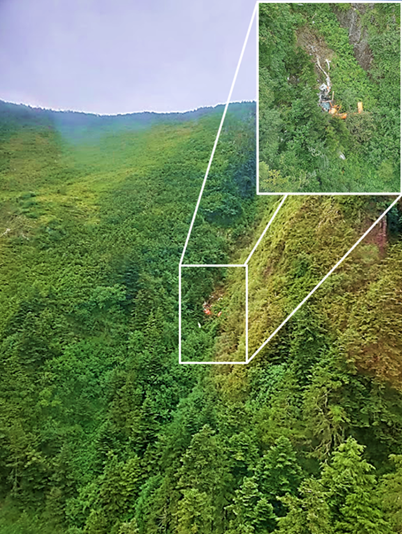
Occurrence site, looking south, with close-up view in inset (Source of both images: Joint Rescue Coordination Centre)
No sign of mechanical problems
Search crews later found a ground scar about 450 feet uphill from the wreckage that matched the external load striking the slope after being released in flight. The longline was still attached to the load, and investigators reported no damage to the line or hook and “no indication that the load came into contact with trees or terrain before being released by the pilot.”
All major parts of the helicopter were recovered. Because of the heavy damage, full system testing was not possible, but the TSB found “no signs of a system malfunction that would have affected the controllability of the helicopter.”
The pilot held a commercial helicopter licence, a valid medical, and about 1,260 hours total flight time, including experience on the AS350 B2 and longline work. Company rules required staying clear of cloud, with at least half‑mile visibility and a minimum safe airspeed of 65 mph when flying low in uncontrolled airspace.
Changing weather and reduced‑visibility risk
Weather analysis found layered cloud over western Vancouver Island, including cloud bases as low as 400 feet above ground at Tofino/Long Beach Airport and winds near Brooks Peninsula strengthened by the terrain to about 20 knots. Convection at higher levels was producing scattered showers and possible streaks of rain that evaporated before reaching the ground, which can create turbulence.
With the crash site at 1,867 feet above sea level, the TSB concluded “it is likely that the surrounding area was obscured at the time of the accident.” A search pilot later reported that visibility around the job site ranged “from good to completely obscured by cloud or fog.”
The Board links this occurrence to the broader hazard of unintentionally entering cloud while flying by outside visual reference, noting that such events “pose a significant risk to helicopter flight safety.”
Safety message for employers and operators
The TSB warns that “VFR flight in reduced‑visibility conditions is particularly hazardous in mountainous terrain.” The agency urges operators and pilots to set and follow clear visibility and altitude limits, sometimes called “en route decision triggers”, which define the minimum conditions that, once reached, require turning back, landing or taking another safer course of action.