
Safety failure was organisational rather than individual, says expert
A young woman's death during a rope jump in Brazil points to the systemic failures — gaps in written procedures, personnel redundancy and industry oversight — that can prove fatal in extreme adventure activities, according to a senior figure in the international bungee jumping industry.
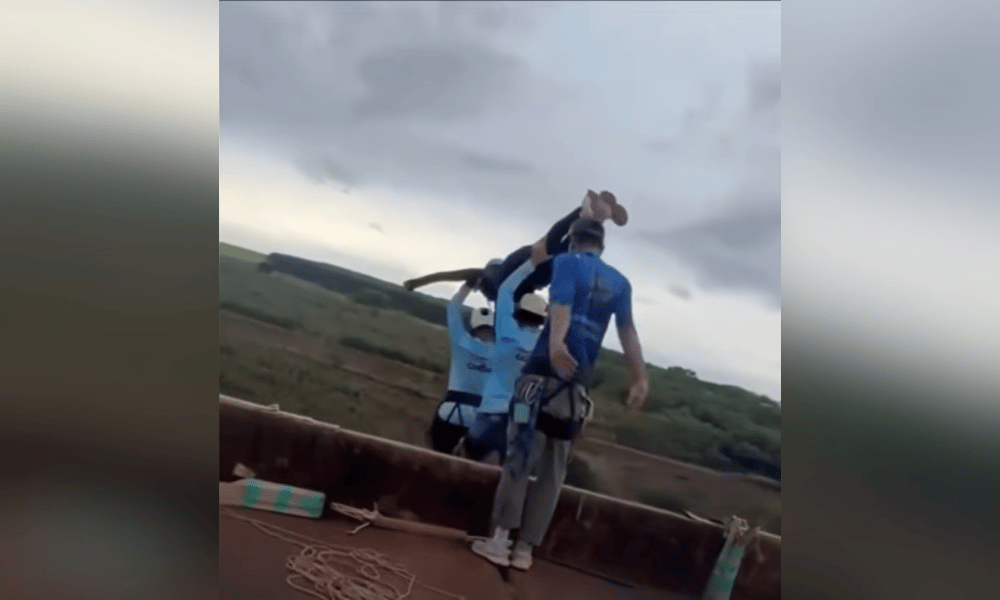
Maria Eduarda Rodrigues de Freitas, 21, died on Saturday after two men hoisted her above their heads and launched her from Skeleton Bridge in the interior of Sao Paulo state without a safety cord attached, AFP reported.
Onlookers realised no safety mechanism was in place and shouted "Guys, the cord!" as she was thrown. Police said the safety equipment was not properly secured and that she did not survive the fall, which local media put at roughly 40 metres.
Three men were arrested for "homicide with dolus eventualis" — meaning they were aware of the risk of death but proceeded anyway. Police said investigations were ongoing to establish liability.
Redundancy, procedures and oversight
Nick Steers, director of Great Canadian Bungee and chairperson of ASTM F3785, the international standard for bungee jumping, said the manoeuvre in the circulating video is a recognised stunt "called the pallbearer," in which staff "grab the person and kind of carry them on their shoulders and fling them from the bridge."
For OHS professionals, he framed the failure as organisational rather than individual, urging "redundancy in personnel" backed by written checks during rigging.
Staffing alone is no safeguard, he warned.
"You can have redundancy in personnel, but if it's chaos with all that personnel that's there, then you can have a situation potentially where nobody does any of the correct procedures," Steers said in an interview with COS.
"And all of a sudden you find yourself in a gross act of negligence with everybody at the same time."
In commercial operations, he said, a site operations manual sets out written procedures that are assigned to specific staff who are trained and tested against them, and a jumper's safety line is "the last thing to be removed in the checklist sequence."
Steers characterised the Brazilian operation as "bridge pirating" — improvised rigging at a structure built for another purpose. He also said reports that indicated the operators had no permission to use the bridge.
Such temporary set-ups, he noted, force crews to improvise the safe zones that engineered facilities are designed to provide. His core message was the value of an unbroken oversight chain from safety standard to trained staff.
"The moment you unplug the oversight from it is the moment we remove that element of redundancy," he said, citing the value of third-party inspection and government involvement.
Rope jumping is not bungee jumping
Steers said the two pursuits are routinely confused because both involve jumping from bridges, cliffs or structures while attached to a harness. "It's very easy to confuse the two activities," he said.
Rope jumping uses a static line of the kind used for climbing or rescue, rigged so the jumper free-falls and is then swung at the bottom of the arc. "The pendulum effect is what dampens the G force," he said, with participants swinging under the bridge. AFP reported that the less elastic cord makes participants swing back and forth rather than bounce.
Bungee jumping, by contrast, sends the jumper straight down on an elastic element.
"The cord would slow the person down and rebound them up vertically," Steers said.
AFP noted that American Dan Osman, considered the inventor of rope jumping, died practising the sport in 1998 at age 35.