

‘A massive amount of work goes into trying to ensure that workers are safe while performing work on critical infrastructure’
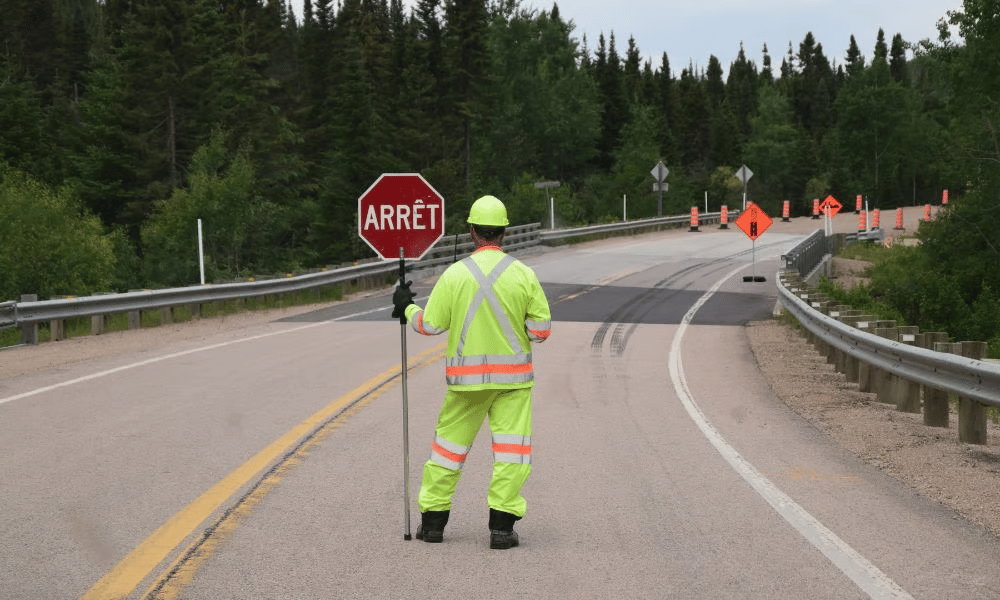
Traffic remains the single most significant factor affecting worker safety in Saskatchewan's roadbuilding and road maintenance industries, and employers must apply the hierarchy of controls to shield crews from passing motorists as the summer construction season peaks, according to one expert.
"Drivers can pose serious risks when they speed through work zones, ignore posted signage, or become distracted, particularly by mobile devices," Ryan Timmermans, regional director at Christian Labour Association of Canada (CLAC), said in a statement sent to COS. "Sudden lane changes, failure to yield, and impatience are all things that can lead to serious, life altering consequences."
Timmermans said motorist behaviour is among the hardest hazards for employers to manage. "The behaviour of drivers on the road is one of the hardest factors to control, and a massive amount of work goes into trying to ensure that workers are safe while performing work on critical infrastructure," he said.
Employer duties span traffic and seasonal risks
Under provincial OHS obligations, employers carry a duty to provide a safe workplace, Timmermans noted, pointing to the hierarchy of controls as the framework for mitigating the risk posed by drivers on public roadways.
"This includes exclusion zones (shutting down a lane of traffic), signage, speed-limit zones, crash trucks/trailers, awareness campaigns, or shifting work hours to off-peak traffic hours," he said.
The most effective protection, however, rests with the public. "The best possible way to protect worker safety during the 'construction season' is for drivers on the road to also prioritize worker safety."
He urged employers to look beyond traffic when assessing seasonal risk. "Employers should be mindful of seasonal hazards such as heat stress, fatigue, and extended work hours," Timmermans said. "Proper scheduling, access to hydration, shaded rest areas, and clear communication protocols all contribute to safer worksites."
Timmermans framed worksite safety as a collective duty, adding that collaboration between employers, workers and regulators is key throughout the busy season. "There is a shared responsibility of safety: employers, workers, and the public all play a role in ensuring everyone goes home safely at the end of the day," he said.
Campaigns and rules reinforce the slow-down message
His comments echo a recent City of Regina campaign urging motorists to slow down and stay alert in work zones. The province records an average of 190 collisions in Saskatchewan work zones each year, resulting in 38 injuries and one death, based on a five-year average from 2020 to 2024 reported to Saskatchewan Government Insurance (SGI).
"At the WCB, we see the real impact workplace injuries have on workers, families and communities. Work zones are workplaces and every worker has the right to get home safely," said Saskatchewan Workers' Compensation Board CEO Phillip Germain in the campaign. "Prevention is a shared responsibility. Every driver who slows down, follows signs and stays alert helps protect workers."
Saskatchewan law requires drivers to obey reduced speed limits in work zones and to slow when approaching stopped enforcement, emergency or service vehicles displaying flashing lights. Speeding fines are higher in work zones, and offending drivers also receive demerits on their licence.