Workers sustained critical injuries
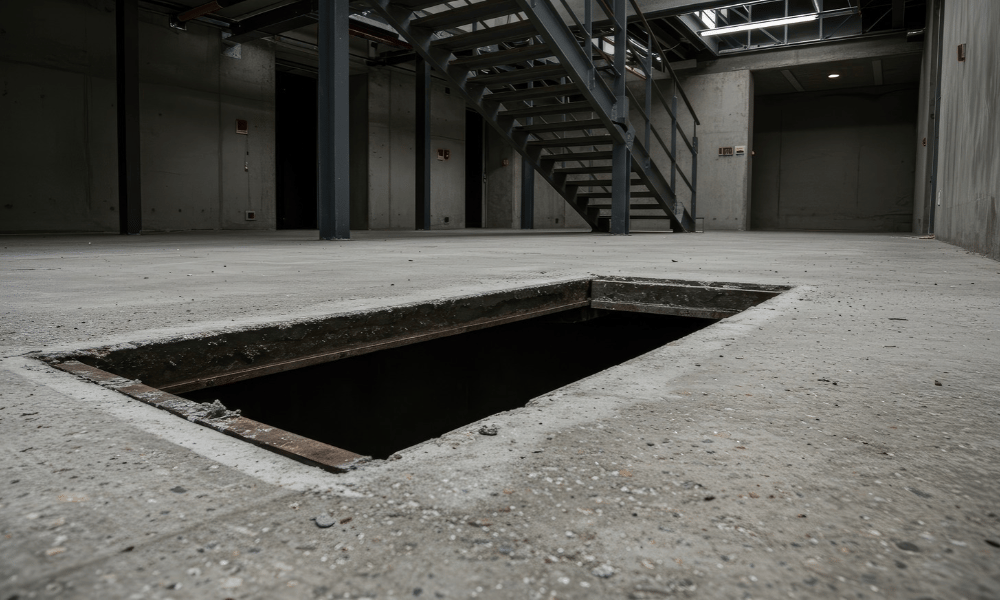
Ontario Clean Water Agency (OCWA) has been fined $100,000 following a guilty plea in Provincial Offences Court in Mississauga after a maintenance team lead fell through an unprotected floor opening at a wastewater treatment facility, sustaining critical injuries.
The case is a sharp reminder for OHS professionals that unguarded floor openings represent a critical fall protection failure the moment a work area is left unattended.
Justice of the Peace Jeannie Anand imposed the fine on Sept. 28, 2026, for an offence that occurred on Nov. 30, 2023. Crown counsel was Wes Wilson. The court also imposed a 25% victim fine surcharge under the Provincial Offences Act, credited to a provincial fund to assist victims of crime.
Established in 1993, OCWA is a Crown agency of the Government of Ontario that operates and maintains more than 1,000 water and wastewater facilities across the province, serving municipalities, First Nations, and other clients. Its facility at 920 East Avenue in Mississauga was the site of the incident.
How the incident unfolded
Workers at OCWA’s Mississauga wastewater building were installing a new motor pump when the incident occurred. The work required opening floor hatches at multiple levels so an overhead crane could lower the motor to a third subfloor. An electrician and an operator/helper opened the hatches but were unable to operate the crane by remote control.
They contacted a maintenance team lead, who told the workers to go for lunch and said they would attend the area when available. The workers left with all hatches open and no guardrail, barrier, or warning posted around any opening.
When the team lead arrived and entered the building, they immediately looked upward to investigate the crane issue and fell through an unprotected opening, sustaining critical injuries. The Ministry of Labour, Immigration, Training and Skills Development (MLTSD) confirmed the openings were unprotected, contrary to the Occupational Health and Safety Act (OHSA).
The OHSA general duty clause and what it means for employers
OCWA was convicted under section 25(2)(h) of the OHSA, which requires an employer to take “every precaution reasonable in the circumstances for the protection of a worker.” This is the act’s broad general duty clause, and employers can face section 25(2)(h) prosecution even where no specific regulation is breached.
The Ontario Court of Appeal has confirmed that this duty is higher than and in addition to any specific regulation. Compliance with Ontario Regulation 851 (Industrial Establishments) — which governs guardrail requirements in facilities like wastewater plants — is therefore the minimum, not the ceiling.
As a recent COS conviction involving a worker falling from a second-storey structure illustrates, Regulation 851 guardrail orders are issued routinely in fall-related investigations, and an employer whose procedures satisfy the regulation may still face liability if the specific circumstances called for additional precautions.
Fall protection failures: context and implications
Falls accounted for approximately 20.6% of all allowed WSIB lost-time claims in Ontario in 2018 — the most recent year for which a comparable province-wide breakdown has been published by the Ministry of Labour. The ministry has since conducted multiple inspection blitzes specifically targeting failure to use adequate guardrails or coverings at floor openings.
Under Ontario’s regulatory guidance, a guardrail or cover is required regardless of the depth of an opening, once it is large enough for a worker to fall through completely. That obligation holds even when the opening was created temporarily by work in progress, and it applies before workers leave the area — not after they return.
The OCWA case also shows the danger of entering a work zone with attention directed elsewhere. The team lead looked upward the moment they entered the building, showing how focus on one hazard can mask another underfoot. As a COS report on a director held personally liable under section 25(2)(h) makes clear, the general duty obligation extends to individual supervisors, not only corporate employers.