

‘These suicides are not just a statistic – they are a warning sign that can no longer be ignored’
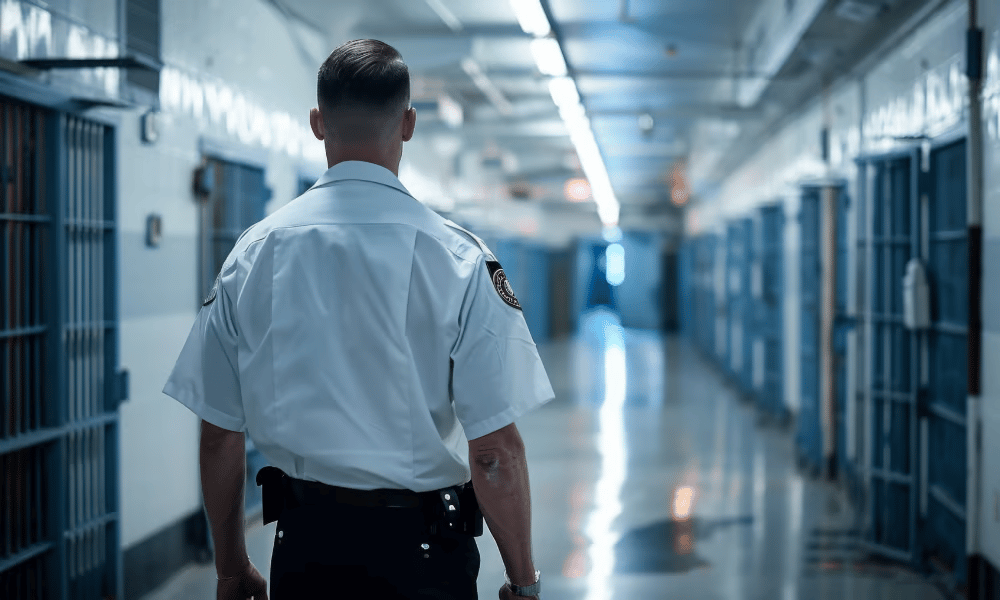
The union representing Ontario's correctional workers is calling on the provincial government to immediately introduce unlimited annual mental health coverage for frontline staff – after a coroner's report examining 34 correctional worker suicides since 2010 went unanswered for three weeks.
The Ontario Public Service Employees Union/Syndicat des employés de la fonction publique de l'Ontario (OPSEU/SEFPO) said half of the 34 deaths by suicide it cited occurred between 2020 and 2024.
OPSEU/SEFPO said the government has taken no action on any of the 28 recommendations contained in the coroner's report since its release roughly three weeks earlier.
Previously, the Public Service Alliance of Canada (PSAC) asked for more staff and greater mental-health support after an inmate was killed at the Donnacona Institution near Quebec City. The group alleged that one of its members was asked to clean up the scene of the killing after investigators left.
Coroner’s report
The recommendations are contained in the "Light of Day" report, authored by Deputy Chief Coroner Dr. Reuven Jhirad, which examined the deaths of 34 correctional service employees by suicide.
Chad Oldfield, co-chair of OPSEU/SEFPO's Corrections Division, said unlimited mental health coverage for inpatient and outpatient treatment would be one of the most effective measures available to government.
"For something that would make such a huge difference, the cost would be barely noticeable in the annual Corrections budget of roughly $1 billion," Oldfield said.
OPSEU/SEFPO President JP Hornick said the government has not matched its stated support for correctional staff with action. "This government has repeatedly said they stand behind correctional workers," Hornick said. "The coroner's report has provided a roadmap for preventing further tragedy," they said, adding that investing in workers' mental health "is a responsibility owed to the brave and dedicated correctional workers who put their lives on the line every day to keep Ontarians safe."
As of OPSEU/SEFPO's June 30 statement, the government had not implemented any of the report's 28 recommendations, according to the union, which said it will continue to press for expanded WSIB coverage and unlimited mental health benefits.
Government response
Ministry of the Solicitor General spokesperson Saddam Khussain told CBC News the province has already taken steps to raise mental health awareness among correctional staff, pointing to newly introduced training and expanded supports available to employees and their families. He cited the province's Mental Health Supports for Public Safety Personnel program, describing it as a provincial investment of up to $45.2 million that extends mental health services to correctional employees alongside police officers, firefighters, and other public safety workers.
Khussain also referenced a wellness strategy the ministry built jointly with the union in 2019. That strategy brought in mandatory suicide-prevention training, a peer support program tailored specifically to corrections staff, and a 24-hour therapy phone line that became available to employees last month. He said mandatory trauma resiliency training is scheduled to roll out later this year.
According to Khussain, the ministry is still assessing the coroner's findings and recommendations and intends to provide a formal reply to the chief coroner's office. "Our thoughts are with the families, friends and colleagues" of correctional workers who have died, he said, adding that staff in the correctional system regularly encounter situations that can leave lasting effects on their mental health and wellbeing.
Recommendations from the report
The report's 28 recommendations are grouped into five categories spanning the correctional employee lifecycle, from pre-placement screening through retirement and, where applicable, postvention following a death by suicide.
|
Category |
Sample Recommendations |
|
Pre-placement/training |
Validated psychological screening for applicants; mandatory mental health literacy, SafeTALK, and ASIST training; at least one additional week of funded training; site-specific onboarding for youth justice and probation/parole staff |
|
Employed staff |
Establishment of an Employee Support Team (EST) with clinicians, occupational therapists, and peer supports; quarterly wellness check-ins for staff in their first two years; mentor pairing with more experienced colleagues |
|
Staff on leave |
Regular, consented communication between staff on leave and a designated contact; connection to the EST for return-to-work planning at a minimum of quarterly intervals |
|
WSIB and benefits |
Expanded presumptive coverage beyond post-traumatic stress disorder to include major depressive disorder, anxiety and panic disorder, and substance use disorders; continued WSIB-related supports for employees who remain at work |
|
Deaths by suicide |
Mandatory annual review of all deaths by suicide among public safety personnel; in-person postvention supports for families, including grief resources and coordination on benefits and funeral planning |
Other recommendations call for anonymous exit surveys of departing staff, public dashboards tracking institutional occupancy and staffing levels, deidentified data-sharing with unions, and legislative protection for information shared during internal quality-improvement reviews.
Earlier this year, five correctional officers were assaulted at the medium‑security Springhill Institution in Nova Scotia, an incident their union said reflects growing violence in federal prisons across Canada.