‘The hazards noted did not meet the tug crew members' threshold for a formal hazard report’
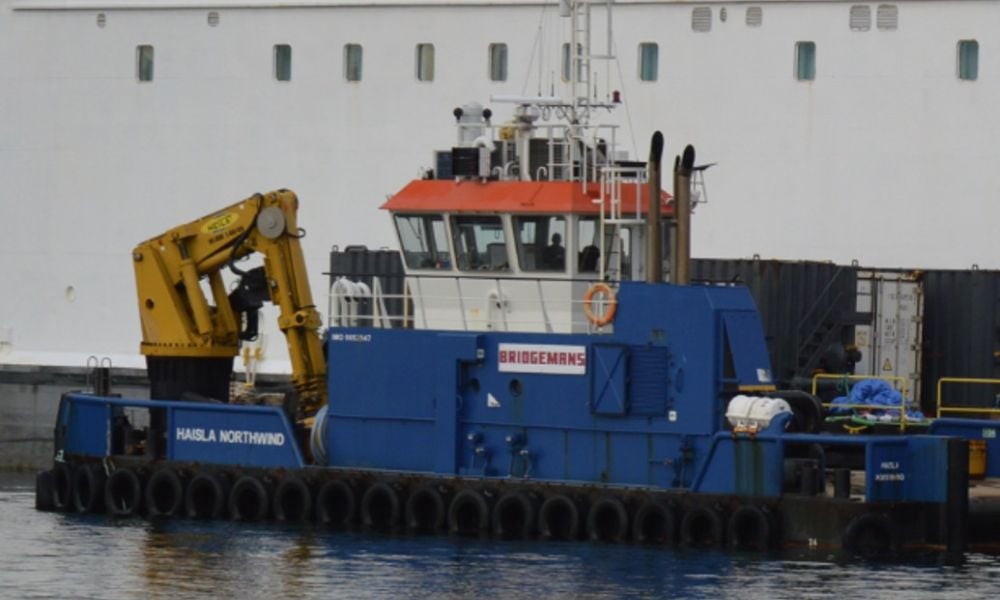
Obstructed visibility and lookout gaps contributed to a 2024 collision that sank a workboat at the Woodfibre LNG Project site near Squamish, B.C., the Transportation Safety Board of Canada (TSB) found.
The agency also flagged hazard-reporting gaps common on multi-employer worksites.
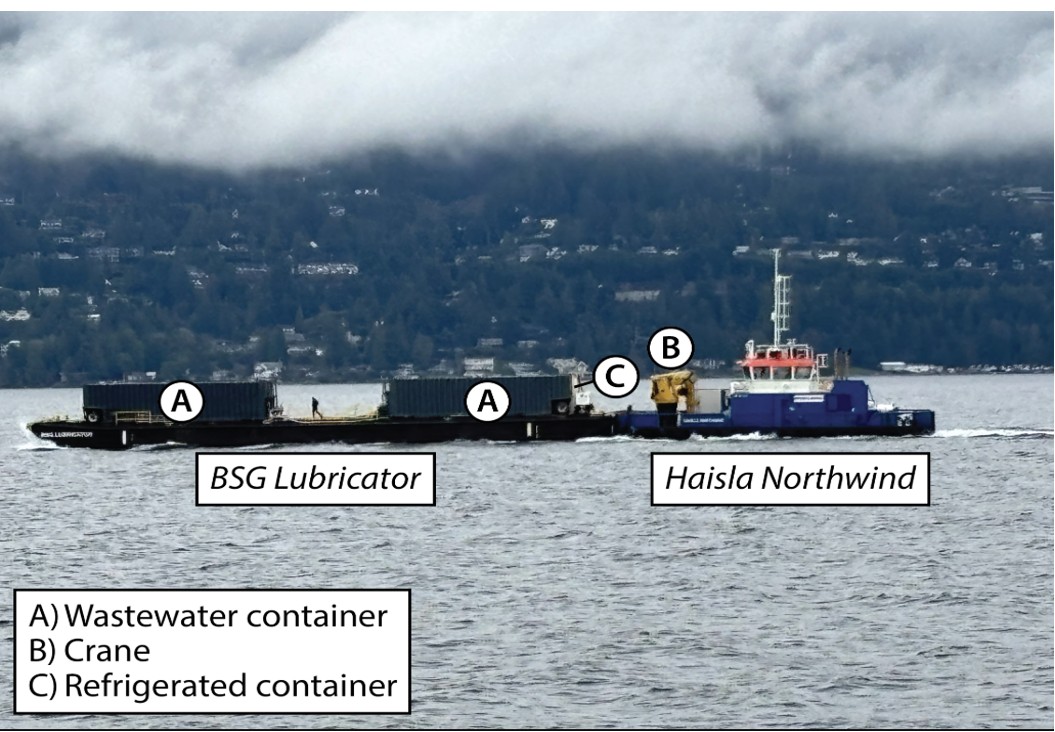
The report – released Sept. 29 – said the tug Haisla Northwind was pushing the barge BSG Lubricator toward a floating worker accommodation on Dec. 18, 2024, when the barge struck the idling workboat Triton 1. Triton 1 then capsized and sank.
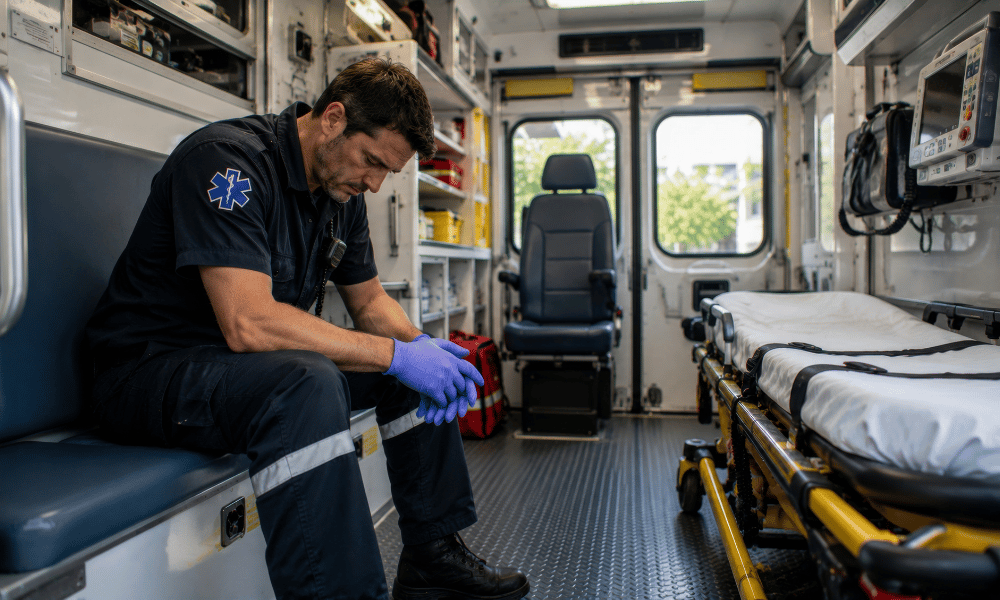
Its lone operator, who had removed his personal flotation device to escape, was pulled from water of about 5 °C and treated for hypothermia.
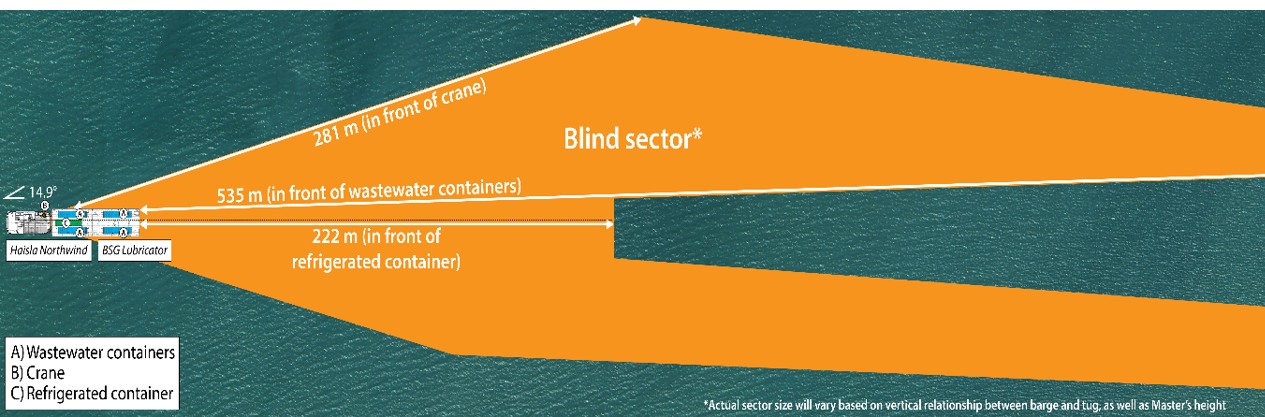
A crane on the tug and containers on the barge blocked the master's forward view, glare made the workboat's light hard to distinguish, and no lookout was yet posted. The operator, facing away, was on a cellphone call that "likely diverted his attention from maintaining a lookout around the workboat," the TSB said.
Hazards raised, never formalized
Tug masters had informally told management about shoreline glare and worse visibility after a refrigerated container was added to the barge in November 2024. Nothing changed. Stability was assessed before the container was installed; visibility was not.
"The hazards noted above did not meet the tug crew members' threshold for a formal hazard report because they were representative of issues the crew members had to deal with on a regular basis," the TSB said.
Tschudi Ship Management, which managed the tug's crews, had a hazard-reporting procedure "focused primarily on hazards that can lead to physical harm," not operational ones, the board found. Neither Tschudi nor tug owner Bridgemans Services Group yet needed a safety management system; federal rules in force since July 2024 set the tug's deadline at July 2, 2026.
Contractor silos
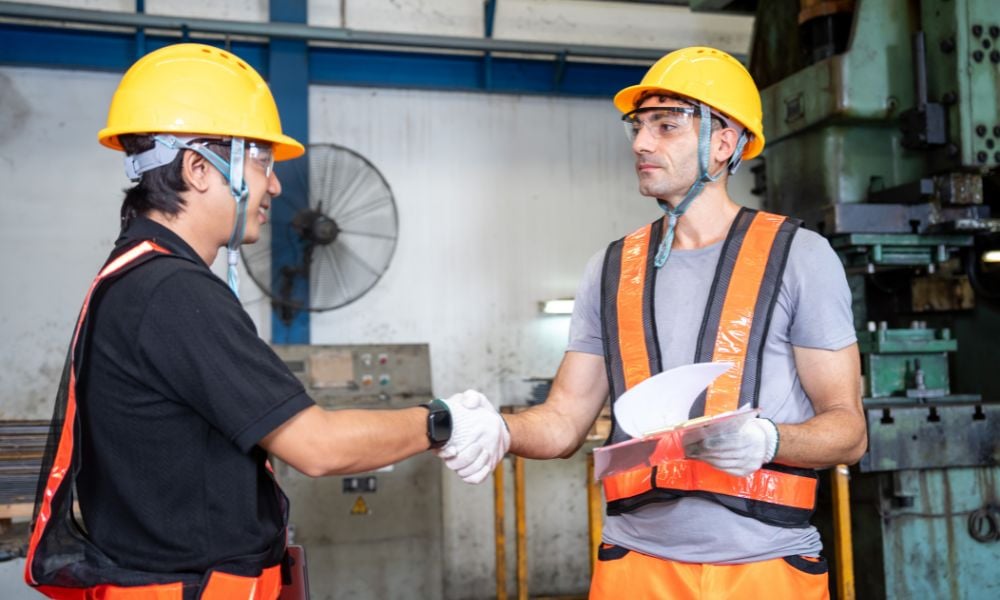
Contractors including McDermott International, Bridgemans and Roe Environmental Inc., which operated the Triton 1, ran safety systems that "were not harmonized in a way that ensured consistent hazard identification, reporting, and mitigation," the TSB said. It classed such gaps as future risks, not causes.
Roe workboats routinely idled on standby where the collision occurred, unknown to the tug master, and the tug schedule never reached Roe. The TSB linked such habits to "practical drift," a concept it also cited after an overloaded barge capsize in Nunavut.
Working alone requirements for Canadian employers vary by jurisdiction, but McDermott's own rules state subcontractor personnel "shall never be left alone" where they could enter the water uncontrolled. The Triton 1 operator worked alone, and Roe staff "were unaware of McDermott's working alone requirement."
Since the collision, Bridgemans has posted full-voyage lookouts and restricted barge movements to daylight, though the report also lists a nighttime escort vessel. Roe now requires two-person crews on marine mammal observation vessels and added cold-water immersion training. The report contains no new recommendations.
Marine safety management remains on the TSB Watchlist until operators show "that hazards are being identified and effective risk-mitigation measures are being implemented and then validated for effectiveness," the board said. As of July, 78 TSB safety recommendations remained outstanding, most directed at Transport Canada.