‘This report will help shape our approach moving forward to ensure we are better prepared to respond whenever an emergency occurs’
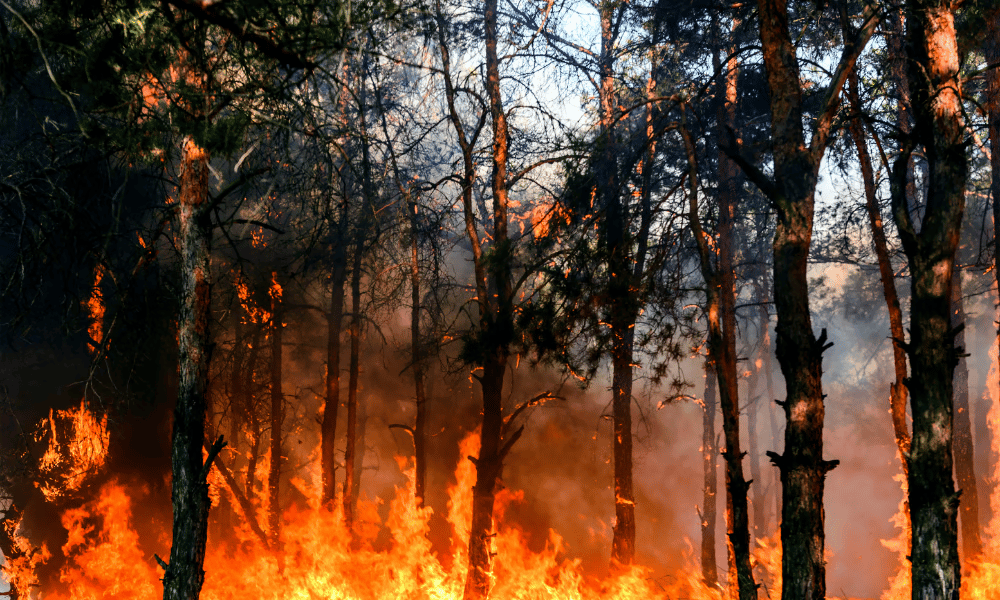
An independent after-action review of Manitoba's record-breaking 2025 wildfire season has found that occupational health and safety failures among emergency management workers — including staff fatigue, unsafe deployments, and equipment shortages — significantly hampered the province's wildfire emergency response.
The province's occupational health and safety obligations to emergency workers went unmet across what the report describes as the most devastating wildfire season in Manitoba history, according to the 97-page 2025 Wildfire After Action Report, prepared by Brandon University in collaboration with the Alberta Emergency Management Agency (AEMA).
The report found that extended deployments placed workers under sustained physical and psychological pressure, with many employees working lengthy shifts over consecutive days or weeks with limited rest. Wellness supports were largely implemented reactively rather than through an established preparedness framework, the report states.
The report also found that redeployed public servants frequently arrived at unfamiliar worksites without clear reporting instructions, adequate site orientation, or guidance on safety and security procedures.
Inconsistent supervisor check-ins compounded the risk, particularly during evening and overnight shifts. Recommendation 18 of the report addresses those gaps directly, calling on Manitoba to meet and improve its occupational health and safety obligations to its workforce in emergency operations, redeployment, and prolonged response — a concern Canadian Occupational Safety has previously reported in the context of wildfire emergencies.
Kyle Ross, president of the Manitoba Government and General Employees' Union (MGEU), told Global News the human toll was lasting. "Many said they don't know if they're coming back after a summer like that," he said.
Equipment and training gaps endangered frontline workers
Those workforce pressures were compounded by what the report characterises as a systemic preparedness and logistics issue. Shortages in wildland pumps, hoses, radios, vehicles, and fuel affected frontline operations throughout the season, while interoperability issues between radio systems of different responding agencies further limited communications and co-ordination in the field.
The fires – which burned 2.2 million hectares across 445 blazes – also exposed training gaps. The report found that many workers were assigned to Incident Command System (ICS) and incident management team roles without adequate training, creating uncertainty around responsibilities and decision-making authority — an issue Canadian Occupational Safety has reported on as wildfire seasons intensify and threaten outdoor and remote workers.
The report recommends the province develop a provincial emergency logistics network and an emergency workforce framework to ensure pre-event training readiness and flexible deployment in future responses, in keeping with the broader push in Canadian workplace safety toward predictive risk management and AI-assisted incident prevention.
Province commits to 22 recommendations and new hires
The province has accepted all 22 of the report's recommendations and is already acting on several. A new wildfire attack base has been established in Thompson, 19 additional firefighters and 15 emergency management staff have been hired, and $1.2 million has been invested in emergency communications and wildfire response capacity.
Transportation and Infrastructure Minister Lisa Naylor said the final report would drive further change. "This report will help shape our approach moving forward to ensure we are better prepared to respond whenever an emergency occurs," she said in a government news release.
The report also calls for replacement of Manitoba's outdated 1988 Emergency Measures Act with modern legislation better suited to prolonged, multi-community disasters, and recommends stronger recovery planning requirements for local authorities and clearer emergency powers for communities absorbing evacuees. The 2025 season saw nearly 33,000 Manitobans evacuated from 59 communities, two deaths in the Lac du Bonnet area, and emergency co-ordination sustained over a reported 159 days.