This is a shocking step backward for public health'
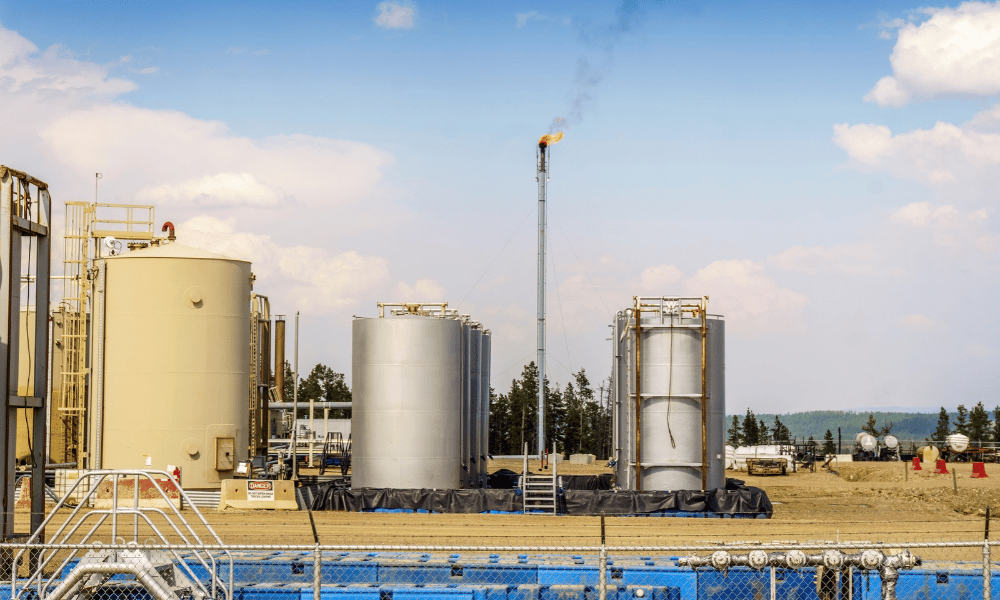
Natural gas flaring across Alberta's oil fields is climbing in 2026 after the province eliminated its regulatory ceiling on the practice, raising occupational health and safety concerns for energy sector workers.
Alberta Energy Regulator (AER) data analyzed by Reuters shows producers are on track for a 10% year-on-year increase in 2026, following a 15% decline in 2025, even as output expanded both years.
Operators flared 644 million cubic metres between January and September — approaching the prior annual ceiling of 670 million cubic metres the AER scrapped in June 2025 at the direction of Alberta government officials.
The cap had already been breached in both 2023 and 2024, yet rather than enforce the existing limit, the regulator removed it. The health community's response was immediate.
"This is a shocking step backward for public health in Alberta," said Dr. Stephen Wilton, a Calgary-based cardiologist and co-chair of the Canadian Association of Physicians for the Environment (CAPE Alberta).
"Flaring releases toxic air pollutants that cause asthma, heart disease, and cancer. This is an abdication of the government's responsibility to protect the health of Albertans. We urgently need independent air quality monitoring, with public reporting and enforcement. We can't protect public health if we don't even measure the harms."
Health risks and the worker exposure gap
The removal leaves Alberta without a province-wide limit on a practice that releases volatile organic compounds (VOCs), polycyclic aromatic hydrocarbons (PAHs), black carbon, nitrogen oxides, and sulfur dioxide — pollutants that OHS professionals across Canada's energy and resource sector are trained to control, according to CAPE Alberta.
A peer-reviewed study found roughly 3% of Alberta's population — about 120,000 people — lives within 1.5 km of an active flare, with rural and Indigenous communities disproportionately represented. (Lavoie, Risk & Rainham, International Journal of Environmental Research and Public Health, 2024) Studies on occupational hygiene and chemical exposure in the energy industry link sustained flare proximity to elevated cardiorespiratory risk; a longitudinal study of Deepwater Horizon workers found PM2.5 from flaring significantly increased coronary heart disease risk over ten years.
CAPE Alberta, citing research, has noted a 1% increase in flaring exposure correlated with a 0.73% rise in respiratory-related hospital visits — and that the AER relies on industry-reported data, meaning actual exposure levels may exceed official figures.
Industry and government respond to rising flaring risk
Amanda Bryant, oil and gas manager for the Pembina Institute, was direct about the limits of voluntary action. "This pattern shows that industry has the ability to reduce solution gas flaring but needs rules obligating them to do so," Bryant said. "Many companies will choose to do only what is required of them, so regulation acts as an important floor for action."
A spokesman for Alberta Environment Minister Grant Hunter said the removed cap "no longer reflected Alberta's modern approach to managing flaring and reducing emissions." The AER attributed higher volumes to overall growth in activity; Alberta's oil output rose approximately 2% in the first nine months of 2026 year-on-year.
Rising flaring puts Alberta at odds with Canada's Enhanced Methane Regulations, in force January 1, 2028, which restrict flaring to health and safety emergencies or where no engineering alternative exists. COS's 5-Star Energy and Resource Companies report for 2026 found that leading Alberta operators such as Pembina Pipeline have already deployed continuous gas detection and real-time emissions monitoring — the controls the incoming federal rules will make standard across the sector.