Lesley de Repentigny ties the risk to vehicle automation, months after her company’s Readers’ Choice win
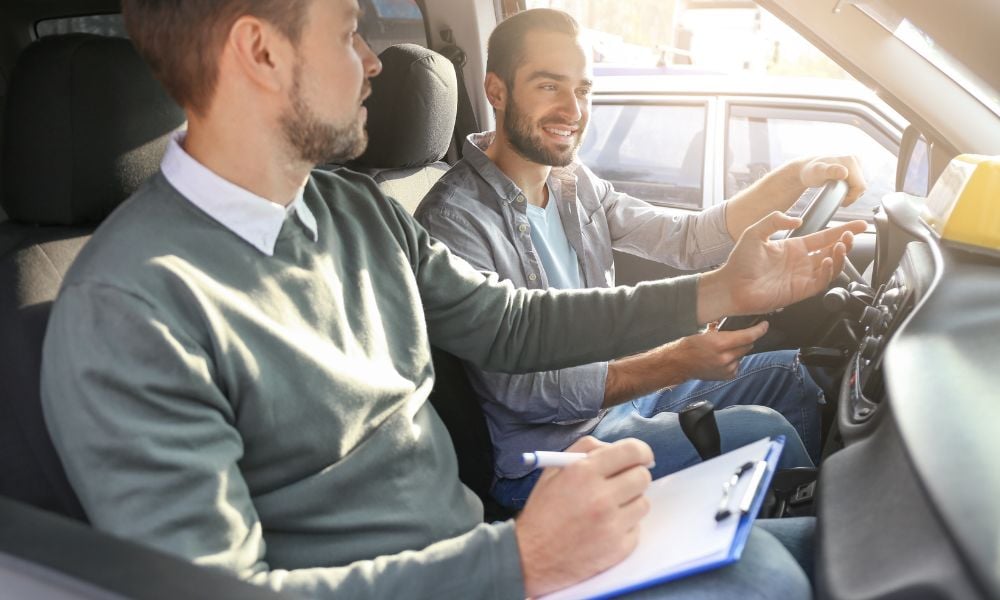
DriveWise, a Canadian commercial driver training provider, has won a 2026 Readers’ Choice Award from Canadian Occupational Safety, an honour president and CEO Lesley de Repentigny discusses in a COS TV video interview marking the win, tying it to a 99.9 per cent client recommendation rating the company has held for 22 years. DriveWise now trains roughly 35,000 drivers a year through more than 100 partner centres across the country. De Repentigny says the bigger test ahead is not winning awards but managing what she calls skill fade: drivers losing their own abilities as vehicle automation takes over more of the driving task.
A 99.9 per cent rating built on refusing to go off the shelf
Readers’ Choice winners are chosen directly by occupational health and safety (OHS) professionals across Canada, which is why de Repentigny treats any dip in satisfaction as urgent. “One of the pillars of our company is client service. Our core culture is to be client-centric, so to have clients vote for us means we’re succeeding where we want to,” she says. “We have been around for 22 years now. When we started and only had maybe 100 clients, we had a 99.9 per cent client recommendation rating, and now our programs serve about 35,000 people a year, and we’ve maintained that rating. If we see that rating start to slip, it’s not a pleasant day for us, because we brainstorm immediately anytime there’s even a glimpse of anything going below 99.9.”
That rating, she says, rests on a refusal to run generic courses: “It’s all about the client, about meeting their needs, about targeting all our learning into their specific fleet needs, and not doing off-the-shelf training, but doing customized, targeted training for each and every client.” For example: “If you take an off-the-shelf driver education or driver training program, and your incidents are all being caused because of close-quarter manoeuvres, an off-the-shelf course may put five per cent of its time on close-quarter manoeuvres. With us, there’s going to be a higher concentration on understanding and practising close-quarter manoeuvres, both in simulator and in-cab, because that’s where you’re going to get the best bang for your buck to reduce incidents and keep your employees safer.” That approach, she says, is why DriveWise can promise results: “We’re pretty confident in saying we’ll get you at least a 20 per cent reduction in the incidents you’re experiencing.”
Simulators, including one the company built itself
Behind that customization sits technology DriveWise built in-house, including a proprietary air brake simulation system meant to create danger without the risk. “People will say they teach head-on collision avoidance, but hopefully they’re not actually getting in a cab or a car and playing a game of chicken with someone,” de Repentigny says. “In a driving simulator, you can allow that situation to develop, and without instructor intervention, see what their actual ability to recognize danger, recognize threat, and make cognitive decisions is, and what their decision-making capabilities are to get themselves out of a situation. It helps to build reflex memories, so if they ever find themselves in that situation, they’ll have some training to fall back on.” A second layer of program-management automation tracks instructor performance and course metrics across DriveWise’s partner centres, used to standardize delivery nationwide. That data-led approach to designing out hazards before they occur echoes this year’s special report on Canada’s 5-Star Safety Cultures, where several employers described a shift from reactive investigation toward predictive, AI-assisted hazard spotting.
What happens when automation takes over the wheel?
De Repentigny, who came to DriveWise from an aerospace and military background, says the industry’s next challenge is a side effect of equipment already on the road, not a new piece of kit. “There’s a thing called skill fade, where there’s an over-reliance on technology to solve the situation for you,” she says. “I’m out of the aerospace industry, out of the military, and we saw the exact same trend there that I see happening now in commercial vehicle operations and in private motor vehicles: as automation comes into the cockpit, which is now the car, there’s an over-reliance on instrumentation, on pre-warnings, on the vehicle controlling the situation, and you’re not ready when automation fails. And automation does fail.” Transport Canada’s own explainer on vehicle automation levels notes that even the driver-assistance features already common on Canadian roads still require constant human oversight, a distinction de Repentigny says many drivers misread.
She points to aviation’s own history with the problem as a cautionary tale: “I hope we don’t follow the same trends that happened in aerospace, where there was quite a lag and quite a few skill fade issues, and they solved it by mandating a certain amount of training per year specifically designed for skill fade, to make sure a pilot can still land and take off by themselves, recognize equipment failures and react to them quickly.” In Canada, the problem is compounded by geography and demographics at once: “Our weather is going to cause more automation headaches than maybe California or somewhere else that doesn’t have a lot of snow. There’s also an aging workforce in our trucking sector that needs replacing, and we have to figure out how to onboard those people safely while taking into account all the automation that’s coming, as well as our particularly difficult driving environment due to our climate.” Statistics Canada data showing persistent gaps in truck driver vacancies tracks the same trend, one that sits alongside a broader wave of retirements now reshaping Canada’s safety profession.
That combination is why de Repentigny argues driver training has to evolve with the vehicles it prepares people for, in step with other corners of the safety sector turning to technology to get ahead of risk, from Skydio’s new drone-based first responder operations opening in Toronto to DriveWise’s own simulator work. Asked where that leaves the person behind an increasingly capable dashboard, she is direct: “DriveWise is here to help the humans adapt to the technology.” The vehicle may be doing more of the work, but someone still has to be ready for the moment it stops.