Skydio's Toronto launch and Vancouver police's drone expansion signal wider gains for worker safety and hazard exposure reduction across Canada
Skydio has opened a Canadian entity in Toronto, formalizing three to four years of growth with Canadian public safety, utility and defence customers, and establishing a sovereign Canadian cloud instance that keeps customer data in the country. The move comes as the Vancouver Police Department prepares to triple its drone as a first responder fleet from six aircraft to 24 by mid-January, after a program that began in June 2026 logged more than 1,100 flights across the city's northern districts.
A Canadian entity built on sovereign cloud
Angad Singh, country manager of Skydio Canada in Toronto, said the timing reflects sustained demand rather than a single catalyst. “Over the last 3 to 4 years, as we've garnered more Canadian customers, it's been incredibly important to the company to ensure that we make a meaningful investment into Canada to ensure that we respect Canadian sovereignty and scale the business in the best way to support our customers,” Singh said.
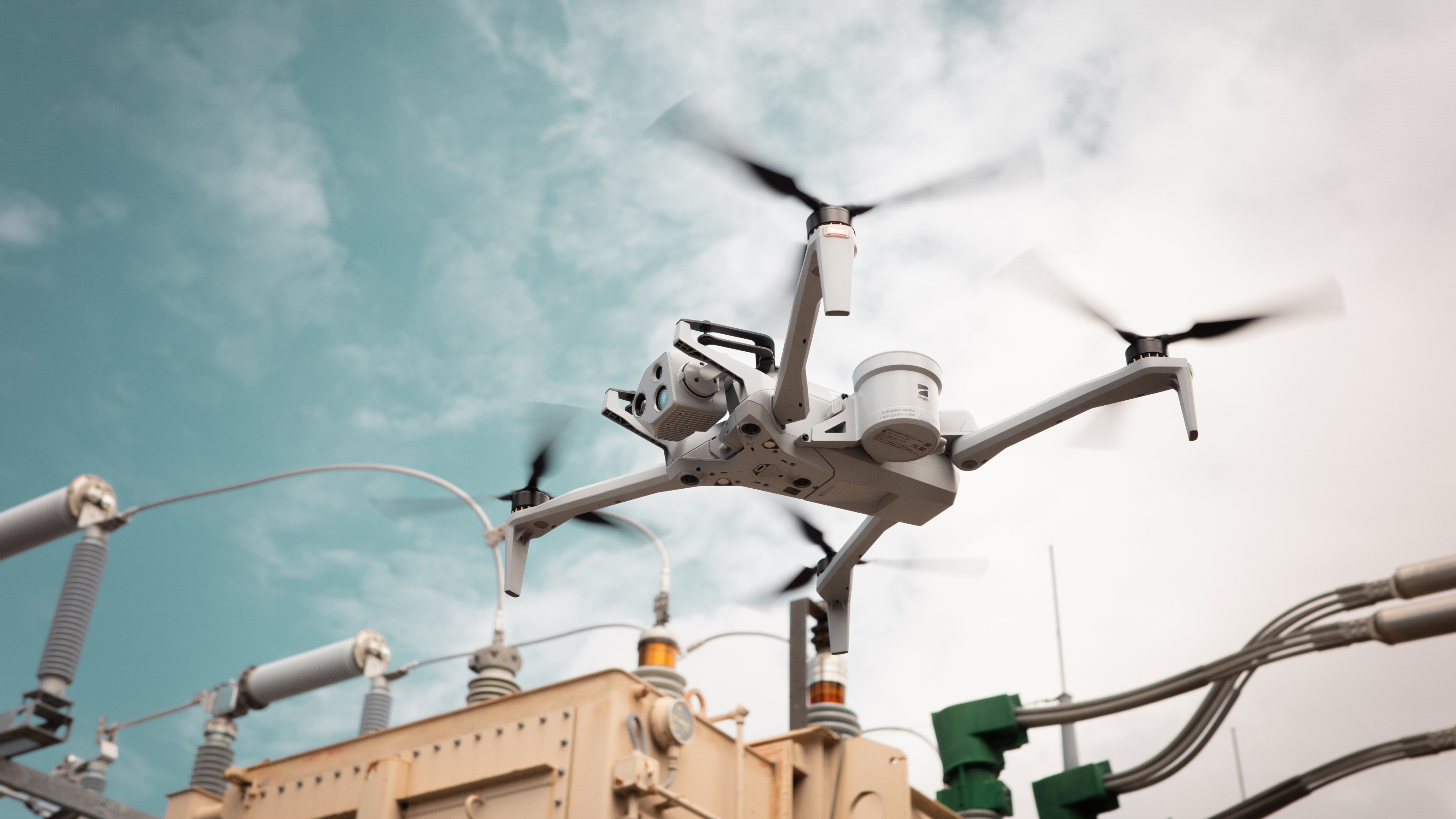
Skydio, which designs and builds its drones in California, now runs Canadian sales, deployment and support staff out of Toronto alongside a Canadian sovereign cloud instance that keeps customer flight data and video hosted inside the country. Singh said the company is targeting three sectors in Canada: public safety and first responders, critical infrastructure such as utilities and energy, and national defence through the Department of National Defence.
Singh describes Skydio's core offering as North America's premier drone as a first responder, or DFR, solution: a technology stack that links a police service's computer-aided dispatch (CAD) system directly to a Skydio drone dock, so a sworn officer can launch a drone toward a 911 call within seconds of it coming in. “We want to get the right information at the right time to the person that needs it the most,” Singh said.
VPD's drones: from pilot to permanent fixture
Vancouver was the first Canadian police force to put that technology into daily use. Wade Rodrigue, an inspector with the Vancouver Police Department (VPD) in Vancouver who leads the force's Force Options Training Section, said VPD launched six Skydio X10 drones and docks across the city's northern districts in June 2026, just ahead of the FIFA World Cup, and has logged more than 1,100 flights since. “It's enabled us to essentially respond within seconds as opposed to, you know, 10, 15 minutes sending people physically to scenes,” Rodrigue said.
The early results have been strong enough to justify a major expansion. VPD already has 16 additional drones in hand and, in partnership with the Vancouver Fire Department, plans to use fire halls across the city as new dock locations, bringing the fleet to 24 units by a projected go-live of January 15. “The numbers are where they need to be,” Rodrigue said, adding the drones respond to calls ranging from emergency response to suspicious-person reports but are never launched for proactive surveillance.
Rodrigue pointed to a mix of dramatic and routine outcomes. On one call, a drone located an officer who was struggling with two suspects at a location different from the one she had reported, letting responding units reach her directly. On shoplifting calls, Rodrigue estimated drones identify and track suspects in real time 60 to 70 per cent of the time, including interceptions at SkyTrain stations. Mechanically, the program's only issue so far has been minor water intrusion from Vancouver's rain, which Skydio has repaired without grounding any unit. The model has drawn visits from police services in Alberta, Ontario and elsewhere, with Calgary's program explicitly modelled on Vancouver's.
Reducing worker exposure in high-hazard industries
For safety and compliance leaders, the more immediate application may be outside policing altogether. Singh said Skydio's obstacle-avoidance system, built around six onboard cameras and developed since the company's founding at the Massachusetts Institute of Technology in 2014, lets drones operate close to energized infrastructure, a credential the company says has been independently verified by the Electric Power Research Institute (EPRI) for electromagnetic interference immunity near energized utility poles. “Drone technology such as ours avoids thousands of hours of worker exposure,” Singh said, citing LNG Canada as one customer using drones in place of sending workers to rig up and inspect smokestacks or flares that would otherwise need to be shut down. Skydio's thermal camera is specced to detect roughly a one-millimetre crack in concrete, Singh said, letting organizations confirm whether a human inspection is actually necessary before sending a worker into a hazardous environment.
That logic lines up with a wider shift already under way among connected safety technology protecting Canada's lone and remote workers, and with the growing use of computer vision and AI systems reshaping how worksites monitor hazards in real time. Singh said the question safety leaders ask him most often is not whether drones work, but what new hazards and oversight the devices themselves introduce. “You would be very impressed with the level of depth and intellectual thought that the people running these programs are putting in,” he said, pointing to built-in parachute systems designed for a soft descent in the event of a failure, and to automatic geofencing that keeps a returning drone clear of no-fly zones.
Pilots in command, and what comes next
Both Singh and Rodrigue were emphatic that the systems remain human-operated. Rodrigue said a description of VPD's drones as “AI drones” is misleading: a pilot in command always decides when to launch and when to recall a drone, even though onboard anti-collision software, similar to the systems in a modern passenger vehicle, helps the pilot avoid obstacles once it is airborne. Transport Canada licensing allows a single pilot to control up to four drones at once, Rodrigue said, but VPD policy caps that at two to avoid overwhelming operators, with the whole program operating under a Special Flight Operations Certificate (SFOC) issued by Transport Canada in coordination with Nav Canada.
Singh said Skydio has built transparency dashboards into the platform so police services can publish when, where and why a drone flew and whether footage was recorded, information that automatically routes into an agency's existing digital evidence management system once the drone returns to its dock. For Rodrigue, the payoff after five months is measured less in headline incidents than in routine ones: faster response to shoplifting and theft calls, and, in at least one case, a drone directing officers straight to a colleague in distress. “I was very happy to see the system work as designed in that particular instance,” he said.
The pattern fits a broader move already visible among Canada's top safety cultures embracing predictive, data-driven approaches: away from reactive incident response and toward tools that identify and manage risk before a worker, or an officer, is exposed to it.