TSB highlights missed safety defences such as planning pre-flight training
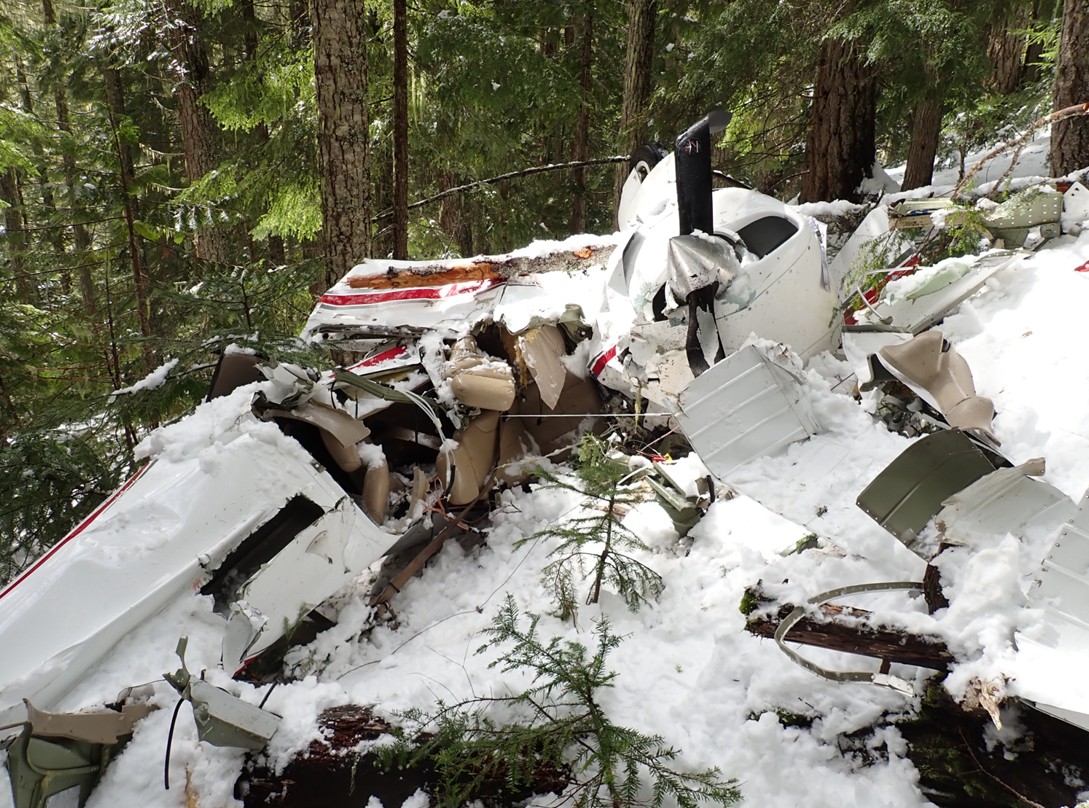
The TSB’s investigation into the 5 April 2025 crash of a Chinook Helicopters (1982) Ltd. Cessna 172S east of Abbotsford Airport points to a familiar but under‑addressed risk: treating mountain flying as an extension of standard visual flight rules operations rather than a specialized environment.
Mountain flying is not “routine” VFR
The aircraft, on what was planned as an instrument training flight, entered a mountain valley near Chilliwack Lake and attempted a low‑level course reversal—often referred to as a canyon turn—without fully applying established mountain flying best practices. The aircraft slowed, descended, and collided with terrain at about 4,000 feet above sea level; both the instructor and student were fatally injured.
The TSB stresses that flying in mountainous terrain is best approached with “specialized knowledge, thorough pre‑flight planning, and disciplined in‑flight decision making,” noting that several recommended practices were not fully executed during the flight.
Guidance from Transport Canada (TC) and the Civil Aviation Authority of New Zealand emphasizes that pilots should avoid flying down the middle of a valley, instead remaining to one side to preserve an escape route and sufficient turning room. The occurrence aircraft did not consistently follow this principle and did not use all available lateral space before attempting the reversal.
The investigation also found that airspeed decayed below the airplane’s published flaps‑up stall speed during the turn, and that flaps, which can be used in confined‑space course reversals to reduce stall speed and turn radius, were likely not deployed.
No regulatory requirement for mountain flying skills
While TC publishes advisory material on flying VFR in the mountains and on flight operations in mountainous areas, there is no regulatory requirement for private or commercial pilots to receive mountain flying training in Canada.
The TSB notes that the Transport Canada Aeronautical Information Manual “emphasizes” the importance of proper training and pre‑flight planning in mountainous regions, yet the Flight Instructor Guide – Aeroplane contains no exercises specific to mountain valleys or course reversals. As a result, the Board concludes that the responsibility to acquire the skills and knowledge necessary for safe mountain flying rests with individual pilots and air operators, and warns that “without such training, pilots may be ill‑prepared to recognize and manage the unique risks associated with mountain flying.”
For employers and training organizations, the safety message is clear: when operations extend into mountainous terrain, dedicated curriculum, supervised practice with experienced mountain pilots and scenario‑based training around canyon turns and escape routes should be treated as essential, not optional.
Planning, flight following and survival preparedness
The investigation also highlights administrative and oversight defences that did not function as intended. Although regulations require a VFR flight plan or itinerary for flights more than 25 nautical miles from the departure aerodrome, none was filed for this flight, which was operating about 43 NM away.
On weekends, no employee was assigned to flight‑following duties, and while a whiteboard and dispatch system entry indicated the Sumas practice area, the aircraft continued beyond that area into more remote mountainous terrain.
The aircraft’s emergency locator transmitter worked as designed and search and rescue teams reached the site, but the TSB cautions that “in cases where ELTs are not effective, a flight plan or flight itinerary may be the only means of locating a missing aircraft,” reminding pilots that the Canadian Aviation Regulations require one to be filed when operating beyond 25 NM from departure.
The occurrence was not survivable because of impact forces, but investigators found a survival kit on board and note that such kits were not routinely carried on instrument training flights to nearby practice areas, even though they were required for flights to remote regions like the accident site.
Operator response and broader implications
Following the accident, the operator added a map beside the dispatch whiteboard on which pilots must mark their planned route in mountainous areas, and provided simulator‑based mountain flying training, ground briefings by an experienced mountain instructor, and a staff‑wide debrief on the occurrence.
For organizations overseeing flight operations—and for safety leaders in any sector—the TSB report underlines that specialized environments demand specialized preparation, clear operational boundaries and robust flight‑following or equivalent monitoring, rather than assumptions that existing procedures will be “good enough” when the terrain becomes unforgiving.