
How one of Canada's largest janitorial companies built a prevention-first culture that keeps claim costs 80% below the industry average
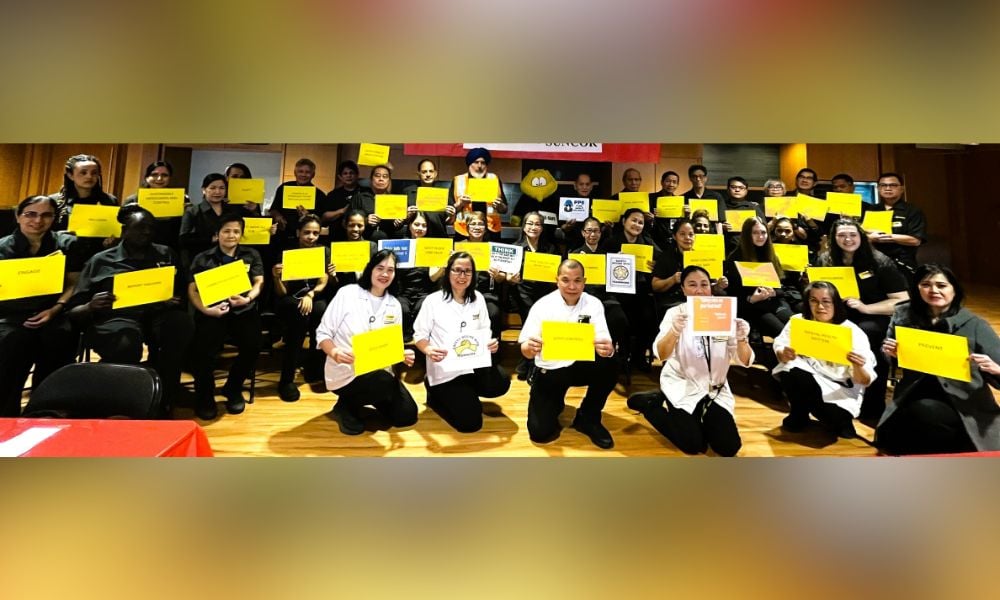
As the occupational health, safety and environmental director at Bee-Clean Building Maintenance in Alberta, Eva Fabian-Orban oversees safety across one of Canada's most logistically complex workplaces.
"Each client environment presents very unique risks," Fabian-Orban says. "Workers are exposed to a wide variety of hazards that require customized safety approaches."
Bee-Clean, founded in 1967, is one of Canada's largest privately owned janitorial and facility services companies, operating across commercial, institutional, industrial, transportation, healthcare, educational and public sector environments from coast to coast. Unlike an organization working out of a single facility, Bee-Clean's workers operate inside thousands of client-controlled spaces, each with its own layout, equipment, foot traffic and hazard profile.
A layered approach to hazard assessment
The company's prevention strategy is built on what Fabian-Orban describes as a layered hazard assessment methodology. It begins well before a worker sets foot on a new site. Pre-work hazard assessments cover not only physical site hazards but also project-specific risks and, critically, workplace violence hazards. That last category is mandatory whenever workers are operating in public-facing environments, a common reality in the janitorial sector.
From there, the approach branches based on contract type. Bee-Clean distinguishes between permanent sites, where contracts can run anywhere from one to 20 years, and temporary project sites. Formal hazard assessments for each environment are conducted by managers and supervisors and communicated clearly to workers before work begins. At the field level, workers themselves are actively involved in identifying what they encounter on any given shift.
"Field level hazard assessments are led by managers and supervisors," Fabian-Orban explains, "but they involve workers who are actually performing the tasks or jobs, ensuring everyone participates in the hazard assessment process."
This commitment to worker participation is consistent with effective hazard identification practices outlined for Canadian workplaces and reflects a broader principle within the company: prevention is a team effort, not a top-down directive.
Technology that travels with the workforce
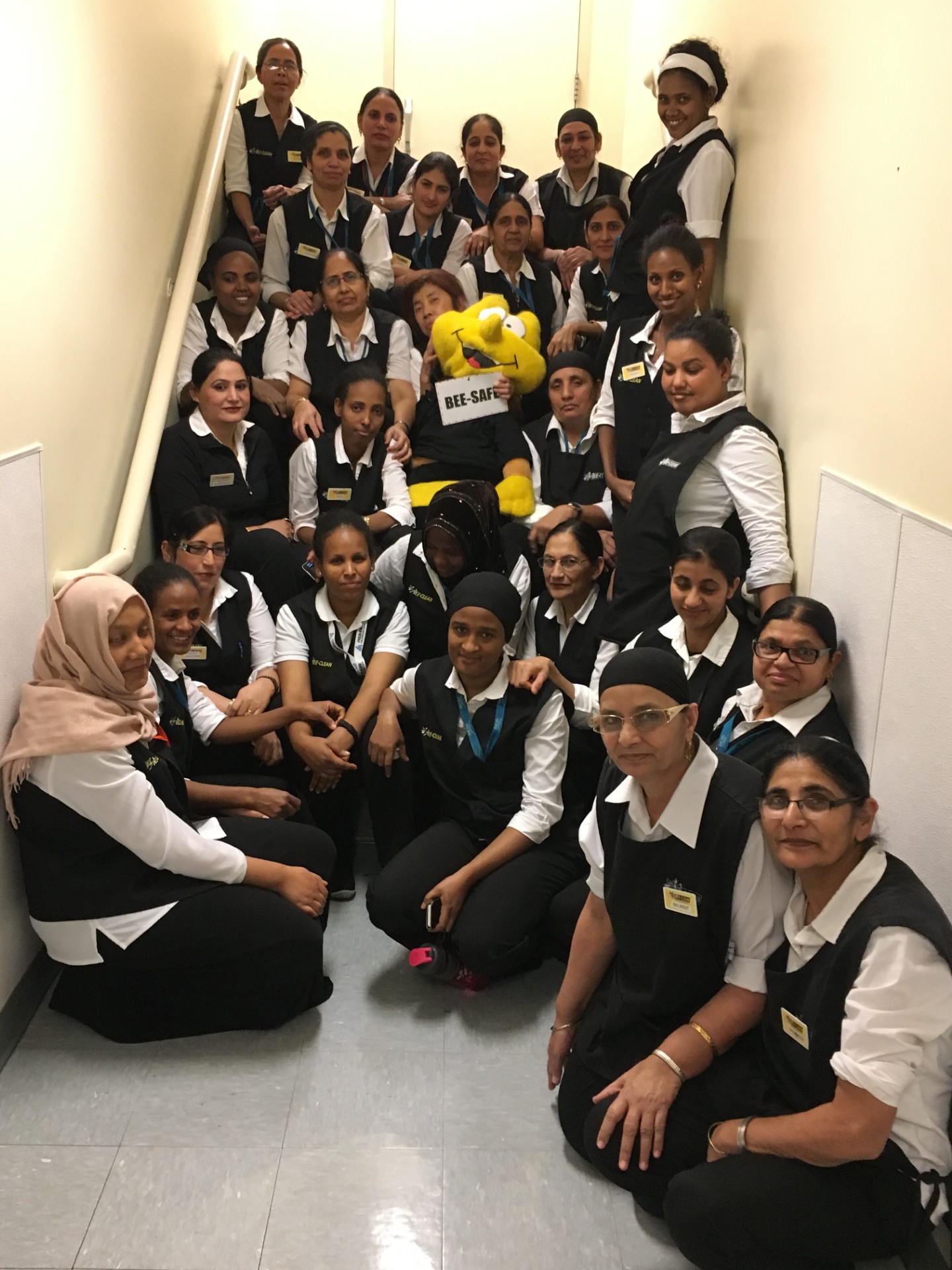
Because Bee-Clean's workers are distributed across sites that a central office cannot easily monitor, the company developed its own proprietary software platform. Called Be Assured, the tool is used for real-time inspections covering both quality assurance and safety. It is customized for each client environment and gives the company a way to track safety performance across dispersed sites in a consistent, documentable format. Fabian-Orban notes that some government facilities restrict online tools due to security protocols, but access is extended to supervisors and workers wherever possible.
Safety is measured through both Workers' Compensation Board (WCB) reportable incidents and internal tracking tools that monitor first aid incidents, near misses, property damage and any event that incurs a cost.
The results speak clearly. In 2025, Bee-Clean's claim costs were 80% below the janitorial industry average, according to Fabian-Orban, and in 2026 they remained 72% below. The company achieved a 40% WCB experience rating discount in 2025 and a 36.2% discount in 2026, placing it well ahead of its industry peers. Safety professionals looking for benchmarks on what strong WCB performance looks like in high-risk industries will find Bee-Clean's figures instructive.
When workers lead, hazards get found
Perhaps the most striking data point from Bee-Clean's program is its employee hazard identification initiative. In 2025 alone, frontline workers submitted 583 written workplace hazards to the health and safety department through the company's incentive contest, a program that rewards employees for identifying and mitigating risks.
That number reflects something harder to engineer than a software platform or a WCB rating: genuine safety culture. For Fabian-Orban, that culture rests on a few non-negotiable principles.
"The critical element of safety leadership is not about never having risks," she says, "but recognizing risks early and listening to frontline workers."
She is direct about what does not work. "A strong safety culture cannot be achieved by paperwork," she says. "It requires being hands-on and listening to people as a whole team."
The most common injuries in the janitorial sector are muscle strains and slip and falls. These can occur on client-owned sites where Bee-Clean has limited control, particularly in winter conditions or on uneven ground, making field-level hazard awareness the company's primary defence.
Extending safety to the full supply chain
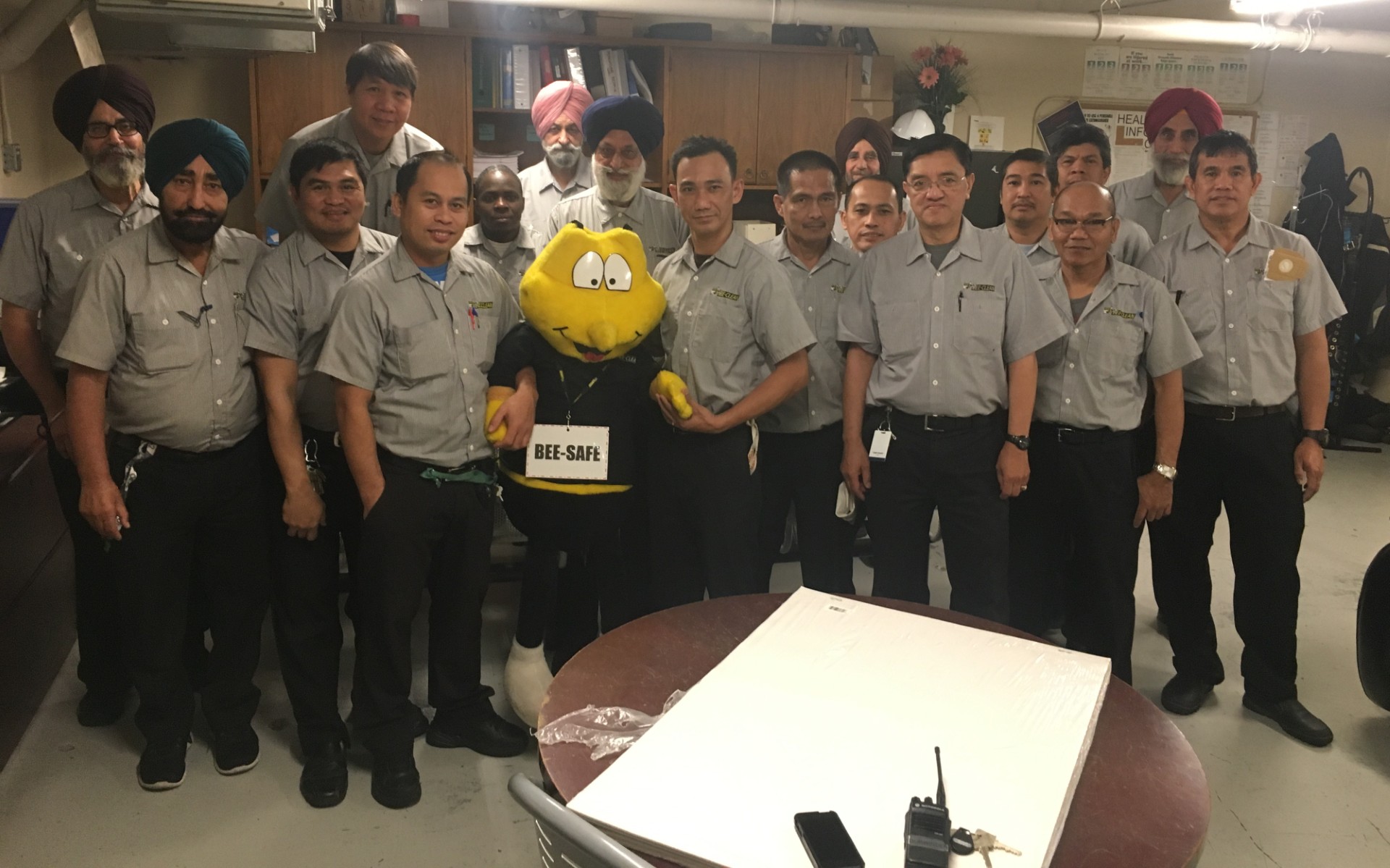
Bee-Clean does not rely on temporary staffing agencies. Instead, it uses its own employees and vetted subcontractors, both integrated into the same safety framework. Subcontractors go through pre-qualification, safety orientation, hazard assessments and performance reviews, with ongoing monitoring throughout. They are required to follow all incident reporting protocols and safety requirements.
"The approach balances integration without micromanaging their own safety responsibilities," Fabian-Orban notes.
This model aligns with the growing focus on contractor safety management that safety leaders across Canada are grappling with as workforce structures become more complex.
Fabian-Orban's advice to other safety leaders is straightforward: be involved, be present and prioritize listening. "Leaders must be involved with every employee and individual who comes on site," she says. Early prevention, she adds, involving all employees, supervisors, leaders and contractors together, is the key to maintaining a safe company over the long term.
This article is part of our Monthly Spotlight series, which in June focuses on prevention and risk management.