The associate membership gives NAV Canada a formal voice in shaping global air traffic management and research funding access
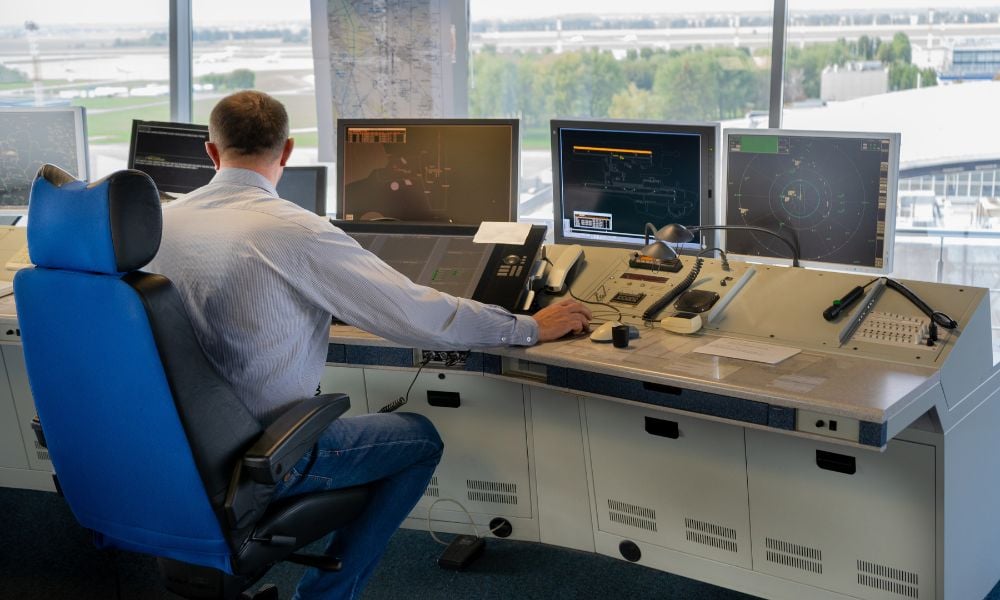
NAV Canada has become the first air navigation service provider (ANSP) based outside Europe to join the Single European Sky ATM Research 3 Joint Undertaking (SESAR 3 JU), the European Union's public-private partnership for modernizing air traffic management. The associate membership, announced June 30, 2026 in Ottawa, formalizes a relationship that already spans four funded research projects and gives NAV Canada a seat alongside Europe's leading air navigation providers, manufacturers, airlines and research bodies.
NAV Canada manages more than 18 million square kilometres of airspace, including the western half of the North Atlantic, one of the busiest oceanic corridors in the world. That footprint is central to why the partnership matters, according to David Sheppard, vice-president and chief technology and information officer at NAV Canada.
"This was a really important milestone for us, and I'd even say the benefits of Canada strengthening its ties with Europe, just in general, for us," Sheppard said in an interview. "Having a seat at the table to help influence those plans, participate in those research and development activities, is really a critical step for us."
Four research projects advance airspace modernization
The membership builds on groundwork already underway. NAV Canada has secured a role in four SESAR research projects, formalized through grant agreements signed earlier in June, with a combined contribution valued at approximately $7 million. Work is scheduled to begin in September 2026, according to NAV Canada.
The four projects are Artemisa, which strengthens system development across the iTEC Collaboration NAV Canada joined in 2024; Network TBO 2, which advances trajectory-based operations concepts led by Eurocontrol; Geese 2, an Airbus-led wake energy retrieval trial; and Natica, led by Frequentis, which integrates long-range air traffic flow management research.
Sheppard pointed to Geese 2 as an example of how the collaboration works in practice. "One of the four projects that we received funding for is with Airbus. What they're trying to do is trial new operational ways of organizing flights to reduce fuel burn and create more efficiency," he said, describing how a trailing aircraft can draw on the wake of the aircraft ahead, similar to geese flying in formation, to burn less fuel. "We're coordinating that with an overseas trial with Canada and Europe, and we're also helping put in procedural guidance and providing air traffic expertise to that project."
Research funding and a seat at the table
Beyond the individual projects, Sheppard said the strategic value lies in NAV Canada's new standing within SESAR itself. "We're the first non-European based ANSP to have been accepted into SESAR. What that gives us is really a seat at the table to discuss how we think air traffic management needs to get built out globally, moving forward, and making sure the Canadian perspective is part of those conversations," he said.
That standing also opens access to European research funding tied to trajectory-based operations and airspace modernization work already in progress at NAV Canada, which Sheppard said would otherwise be difficult to access. Asked whether the move signalled a shift away from the United States, Sheppard was direct. "I wouldn't say the shifting away from the US, but I would say you're tightening the relationships with Europe, because we still have a strong relationship with the US as well right now," he said.
Mark Cooper, president and chief executive officer of NAV Canada, framed the membership in similar terms in the company's announcement. "Canada and Europe have shared a sky for as long as aircraft have crossed the Atlantic. Two years ago, we joined the iTEC Collaboration and now we are honoured to share the table where its future is designed," Cooper said. "Our membership in SESAR will help shape a safer, more efficient and sustainable sky for travellers around the world."
Climate research spans fuel efficiency and contrails
The four projects also position NAV Canada within SESAR's environmental research agenda. Some, including the Geese 2 wake energy trials, target fuel efficiency and reduced carbon dioxide emissions directly. Others advance research into contrails, a contributor to aviation's climate impact whose formation depends on precisely how and where aircraft are flown, making air navigation providers a meaningful lever for addressing it.
The associate membership expands SESAR 3 JU to 59 organizations across the European aviation ecosystem, with NAV Canada joining a cohort of four new members. It follows NAV Canada's 2024 entry into the iTEC Collaboration, in which it also became the first member from outside Europe, co-developing next-generation air traffic systems with seven other national air navigation providers.
For safety professionals watching how large technical organizations modernize their systems, NAV Canada's approach is a reminder to shape international standards before they arrive, rather than adapt after the fact.